Your Toothpaste Might Be Too Harsh: How to Tell If It’s Damaging Your Smile-Real Causes and Effective Solutions
Most people spend more time choosing skincare than toothpaste. Yet the product you use twice a day, pressed directly against your enamel for two minutes each time, has a more direct and cumulative impact on your teeth than almost anything else in your routine. Some toothpastes actively support enamel. Others, particularly when combined with aggressive brushing or frequent whitening, gradually work against it. Knowing the difference starts with understanding what is actually in your tube and what the research says about its long-term effects.
The Real Issue: Abrasivity and How It Compounds Over Time

Every toothpaste contains abrasive particles that help remove plaque and surface staining. The measure of how abrasive a toothpaste is against dentin is its Relative Dentin Abrasivity (RDA) score. The ADA considers any toothpaste at or below RDA 250 safe for daily use, but the research on enamel wear shows that abrasivity is only part of the picture.
A 2023 study published in the National Library of Medicine compared toothpastes with highly different abrasivity values and found that high Relative Enamel Abrasivity (REA), which measures enamel wear specifically rather than dentin, produced meaningfully greater enamel surface loss. REA is the more clinically relevant measure for enamel protection, and it is rarely disclosed on packaging. An earlier study in the National Library of Medicine confirmed that mean enamel wear correlated directly with REA values across a range of toothpastes, the higher the REA, the more enamel is removed with each brushing session.
The cumulative nature of this wear is what makes it clinically significant. Enamel does not regenerate once lost. A small amount of wear per brushing session, multiplied across twice-daily brushing over years, can add up to measurable enamel thinning, particularly when compounded by acidic diet, whitening treatments, or aggressive brushing technique.
The Compounding Problem: When Acid and Abrasion Combine
Enamel wear from toothpaste does not happen in isolation. A randomized in-situ crossover study involving 15 volunteers found that erosion significantly increases the susceptibility of enamel to toothpaste abrasion. In other words, an acidic diet or acidic drinks before brushing can make even a moderately abrasive toothpaste substantially more damaging than it would be otherwise.
This is a pattern many people unknowingly fall into: coffee or orange juice in the morning, followed immediately by brushing with a whitening toothpaste. The acid softens enamel temporarily, and then the abrasive toothpaste acts on a more vulnerable surface than it would under neutral pH conditions. Waiting 30 minutes after acidic food or drink before brushing, and using a remineralizing toothpaste, significantly reduces this compounded wear risk.
9 Signs Your Toothpaste May Be Too Harsh
1. Increasing tooth sensitivity
Sensitivity to hot, cold, sweet, or acidic foods that has developed gradually over months is one of the earliest signals of enamel thinning. As the protective enamel layer becomes thinner, the dentinal tubules underneath sit closer to the surface and stimuli reach the nerve more easily.
2. Teeth appearing more yellow despite regular brushing
Counterintuitively, aggressive whitening toothpaste can make teeth look more yellow over time. As enamel thins, more of the naturally yellow dentin underneath becomes visible through the increasingly translucent outer layer. A toothpaste that is working against your enamel is ultimately working against your whitening goals.
3. Rough tooth surfaces
Healthy enamel feels smooth. If your teeth feel rougher or grittier than they used to, particularly after brushing, the abrasives in your toothpaste may be creating surface micro-irregularities rather than polishing the enamel.
4. Gum irritation or recession
Red, swollen, or receding gums are more commonly caused by brushing technique and force than by toothpaste alone, but highly abrasive formulas can worsen existing gum margin irritation, particularly where the toothpaste contacts soft tissue during brushing.
5. Notches or wedge-shaped defects near the gumline
These are caused by a combination of abrasion and mechanical stress. Dentists can identify them during examination. They are a late-stage indicator that the cumulative wear process has been ongoing for some time.
6. Sensitivity that worsens after whitening treatments
Whitening temporarily increases enamel permeability. If your toothpaste is already abrasive, brushing immediately before or after whitening with a high-RDA product compounds the enamel stress from both. Persistent sensitivity after whitening is a signal to reassess both the whitening frequency and the toothpaste being used.
7. Translucency at the edges of front teeth
As enamel thins at the thinnest points, typically the biting edges of front teeth, they begin to appear slightly blue-grey or translucent rather than white. This is an irreversible sign of enamel loss.
8. Dry mouth or persistent oral irritation
SLS (sodium lauryl sulfate), present in most conventional toothpastes, temporarily denatures the mucosal protein layer inside the mouth. For sensitive individuals, this can manifest as dry mouth, tissue irritation, or increased susceptibility to canker sores, a sign that the toothpaste formula itself is too disruptive for your oral tissue.
9. Discomfort that began after switching toothpaste
If sensitivity, roughness, or irritation started or worsened after a product change, the new toothpaste is the most logical variable to investigate first. Not all toothpastes labelled as whitening or clinical have the same abrasivity profile.
The Solution: Remineralize Rather Than Abrade

The conventional approach to whitening toothpaste is mechanical, scrub the surface cleaner with abrasive particles. The evidence-based alternative is structural, rebuilding the enamel surface so it is denser, smoother, and more light-reflective without removing minerals in the process.
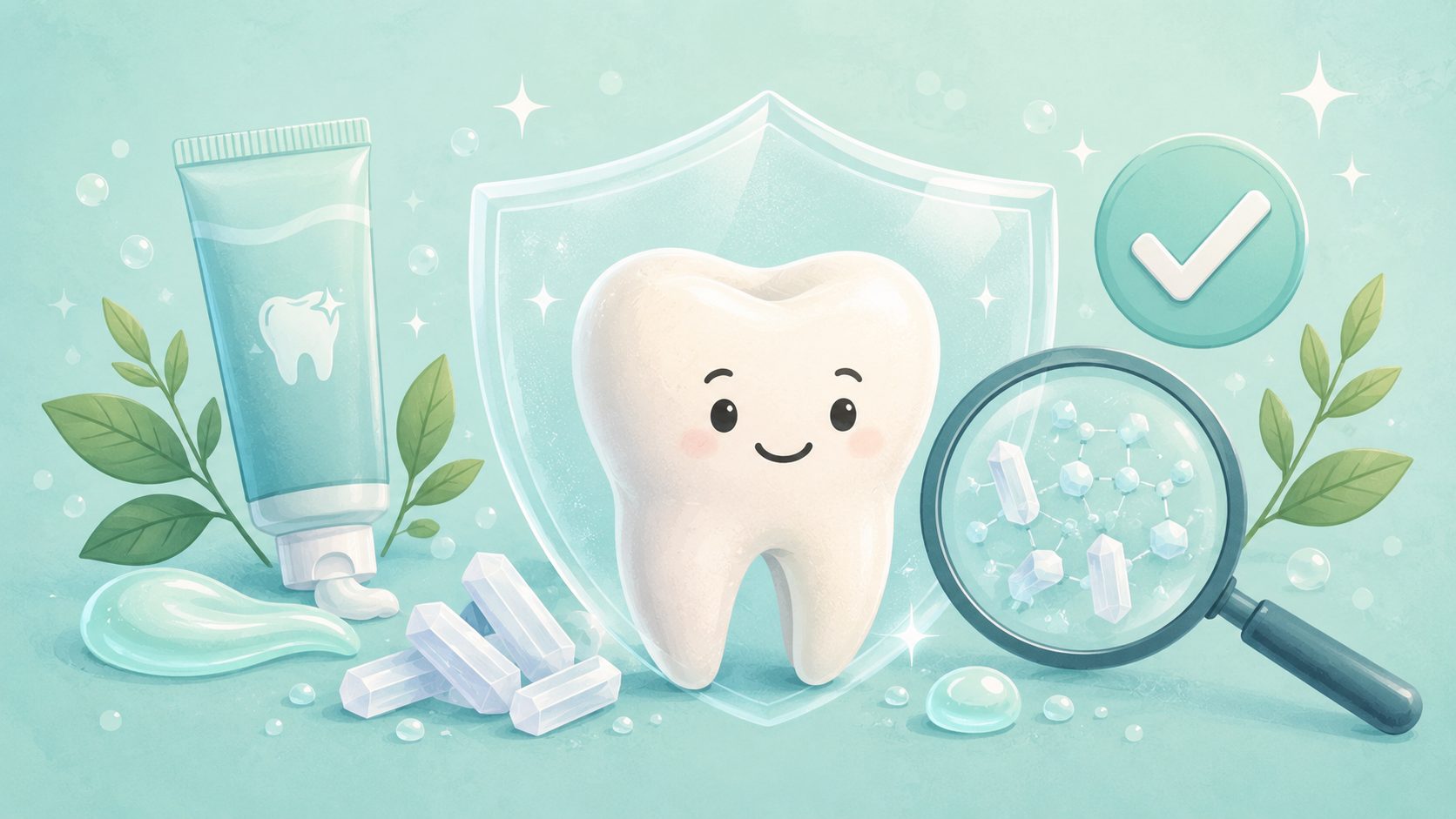
This is the mechanism behind nano-hydroxyapatite. Rod-shaped n-HA in the 20-80nm range remineralizes enamel comparably to fluoride, depositing calcium and phosphate directly into demineralized zones and filling microscopic surface defects. The result is a smoother, denser enamel surface that reflects light more evenly and gives staining pigments fewer pores to cling to. This is a fundamentally different approach to brightness than abrasion, it makes the enamel structurally better rather than temporarily cleaner.
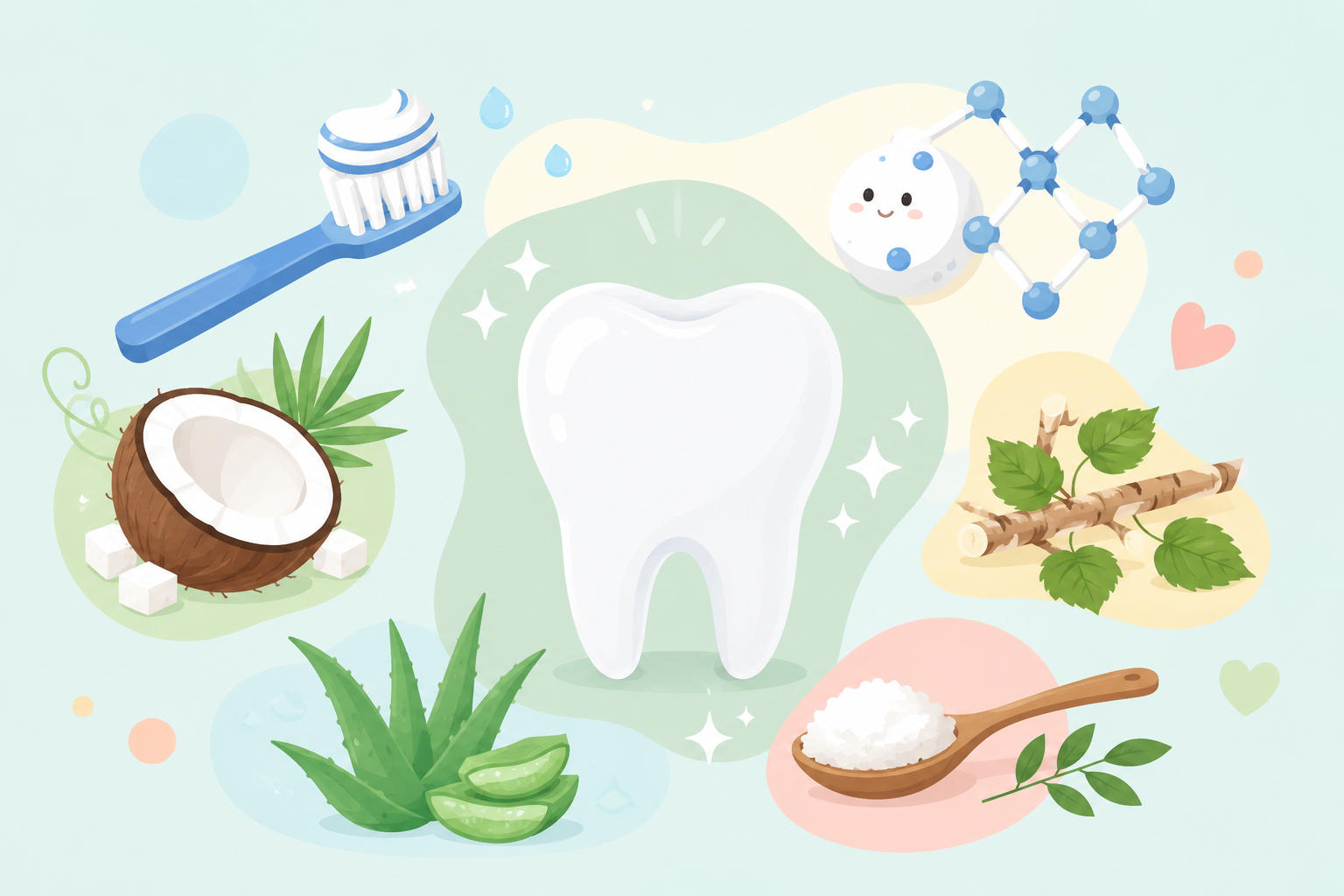
SAINT Mint Toothpaste is built around this principle, rod-shaped nano-hydroxyapatite in the clinically validated 20-80nm range, formulated without SLS, synthetic abrasives, or parabens, alongside aloe vera for gum support, coconut oil for antimicrobial action, and plant-derived xylitol for microbiome balance. Both fluoride and fluoride-free options are available.
What to Look For in a Gentler Toothpaste
-
Low or undisclosed REA: If a brand publishes both its RDA and REA values, that transparency itself is a quality signal. High REA relative to RDA is the combination that puts enamel at greater risk
-
Remineralizing ingredients: Rod-shaped nano-hydroxyapatite in the 20-80nm range or fluoride, ideally both, as they work through complementary mechanisms
-
SLS-free formula: Particularly important for anyone with sensitive oral tissue, canker sore history, or existing gum irritation
-
pH-balanced formulation: An alkaline or neutral pH toothpaste limits the acid exposure window during brushing
-
No synthetic abrasives listed prominently: Ingredients like hydrated silica are standard, but the quantity and grade matter. A toothpaste that leads with abrasives in its whitening claim is worth scrutinizing
Brushing Technique: The Variable That Matters as Much as Toothpaste

Research consistently shows that brushing force contributes to enamel and gum margin wear as much as toothpaste abrasivity does. The two factors are additive, a moderately abrasive toothpaste combined with heavy pressure can cause as much cumulative damage as a highly abrasive toothpaste used gently. A few changes that make a meaningful difference:
-
Switch to a soft-bristled brush - soft bristles remove plaque just as effectively as medium or hard, while producing significantly less abrasive and gum margin wear
-
Use gentle circular or bass technique - horizontal scrubbing concentrates force at the gumline where wear is most damaging
-
Let the brush do the work - the toothpaste and brush contact time matters more than the pressure applied
-
Wait 30 minutes after acidic foods or drinks before brushing, the erosion, abrasion compounding effect is most pronounced in the window immediately after acid exposure
FAQs About Harsh Toothpaste and Enamel Damage
1. Can toothpaste actually damage enamel?
Yes, over time, particularly when combined with aggressive brushing and an acidic diet. A clinical study found that acid exposure significantly increases enamel's susceptibility to toothpaste abrasion, meaning the combination is more damaging than either factor alone. Toothpaste with a high Relative Enamel Abrasivity score used daily with heavy pressure is the highest-risk combination.
2. Is whitening toothpaste bad for teeth?
Not inherently, but many whitening toothpastes achieve brightness through abrasion rather than remineralization. Abrasion-based whitening removes a small amount of enamel surface with each use. Over time, this thins the enamel and can make teeth appear more yellow as the underlying dentin becomes more visible. Remineralization-based whitening, using nano-hydroxyapatite to smooth and rebuild the enamel surface, achieves brightness without this trade-off.
3. How do I know if my toothpaste is too abrasive?
Look for the RDA score, the ADA considers below 250 safe for daily use. More importantly, look for the REA score, which measures enamel wear specifically. If a brand does not publish either value, that is worth noting. Signs that your current toothpaste may be too abrasive include increasing sensitivity, rougher tooth surfaces, or teeth appearing more yellow over time despite regular brushing.
4. What is nano-hydroxyapatite and why is it better for enamel than abrasives?
Rod-shaped nano-hydroxyapatite in the 20-80nm range is a bioidentical mineral that mirrors the natural composition of tooth enamel. Rather than removing enamel to reveal a brighter surface, it deposits calcium and phosphate into the enamel, rebuilding mineral density, filling microscopic surface defects, and creating a smoother surface that reflects light more evenly. It is confirmed that its remineralization efficacy is comparable to fluoride.
5. Is SLS in toothpaste harmful?
Not for most people, but for those with sensitive oral tissue, canker sore history, or gum irritation, SLS can worsen symptoms. It denatures the mucosal protein layer inside the mouth, temporarily stripping a protective barrier. A 2019 systematic review found that SLS-free toothpaste significantly reduced the number, duration, and pain of canker sores in sensitive individuals. For people without these concerns, SLS is lower priority.
6. Can I reverse enamel damage?
Enamel cannot regrow once significantly lost, but mineral density can be partially restored. Nano-hydroxyapatite deposits calcium and phosphate into existing enamel, filling microscopic defects and rebuilding the surface layer. Switching to a remineralizing toothpaste, reducing dietary acid exposure, and improving brushing technique stops further damage and allow the enamel you have to become denser and more resilient over time.
7. Does brushing technique matter as much as toothpaste choice?
Yes, research consistently shows they are additive risk factors. A moderately abrasive toothpaste used with aggressive pressure can cause as much cumulative wear as a highly abrasive product used gently. Addressing both together, switching to a lower-abrasivity remineralizing toothpaste and a soft-bristled brush with gentle technique, produces the most meaningful improvement in enamel protection.