Deep Cleaning vs Regular Cleaning: What Your Dentist Actually Recommends and Why
A healthy smile is not just about how white your teeth look. It is also about what is happening around your gums, under the gumline, and between the teeth where buildup can quietly collect over time. Regular dental cleanings and deep cleanings are often confused, but they are not the same procedure, and they are not interchangeable. One is preventive. The other is a treatment for active gum disease.
If your dentist has ever recommended a deep cleaning, it does not mean your teeth are dirty or that you have failed at oral hygiene. It usually means there is plaque, tartar, or bacteria below the gumline that brushing and flossing cannot fully reach, and that requires professional intervention to address. This guide breaks down the real difference between the two, what causes the need for each, and what you can do at home to keep your gums and enamel in the best possible shape between visits.

What Is a Regular Teeth Cleaning?
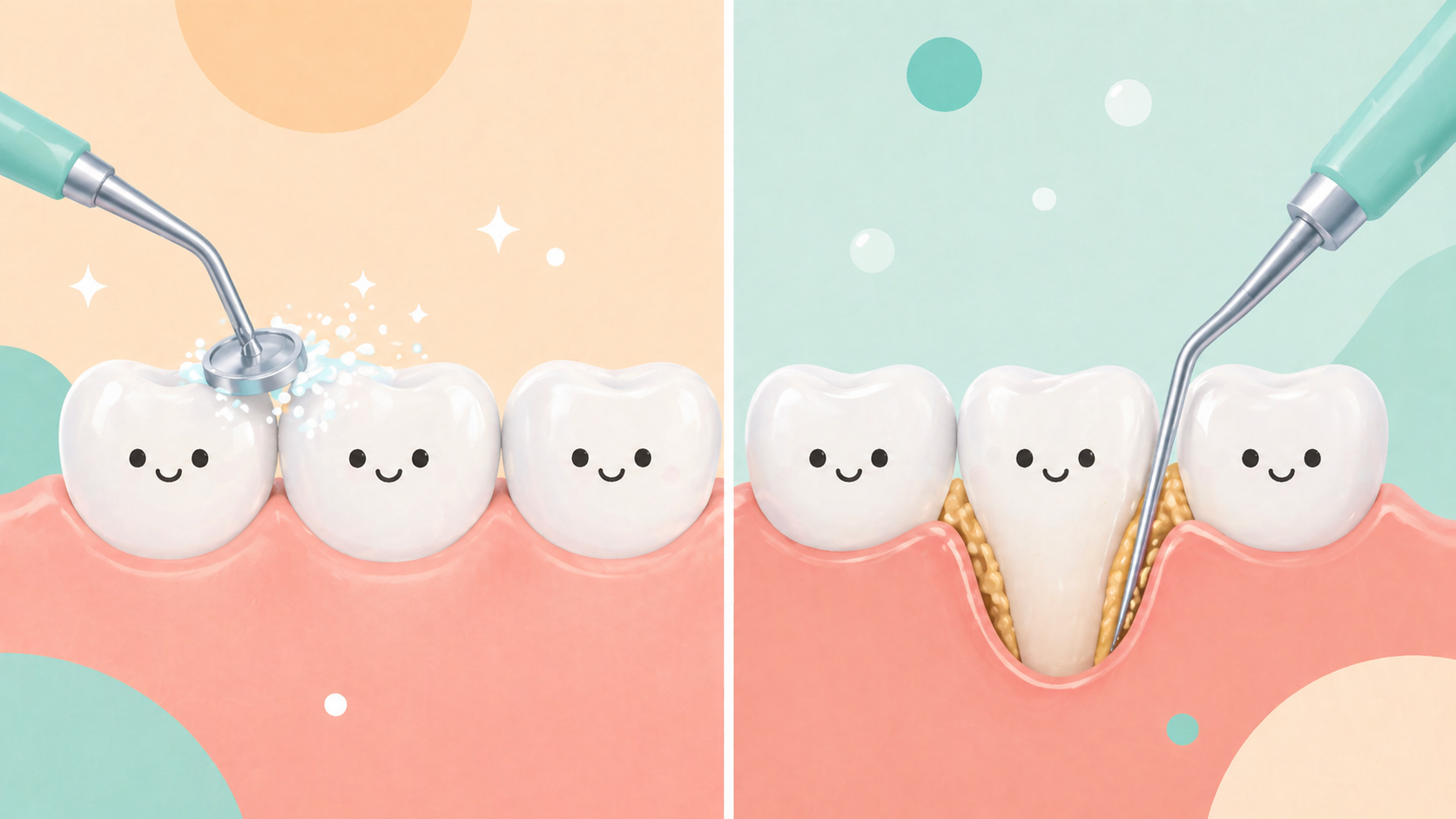
A regular dental cleaning, also called a prophylaxis cleaning, is a preventive procedure designed for people with generally healthy gums. During a regular cleaning, your dentist or hygienist removes plaque and tartar from the visible surfaces of your teeth, primarily above the gumline. The appointment typically includes polishing, flossing, and an exam to check for cavities, gum inflammation, and other early concerns.
Most dentists recommend regular cleanings every six months, though people with higher cavity risk or early gum inflammation may benefit from more frequent visits. Regular cleanings are best suited for:
- People with healthy gums and normal gum pocket depth
- Mild plaque or tartar buildup above the gumline
- Preventing cavities and early gum disease
- Maintaining fresh breath and a clean surface appearance
Think of regular cleanings as maintenance. They keep your mouth healthy before a bigger issue has the chance to develop.
What Is a Deep Cleaning?
A deep cleaning is a different procedure entirely, because it goes below the gumline. The clinical term is scaling and root planing, or SRP. Scaling removes plaque and tartar from both above and below the gums, while root planing smooths the root surfaces of the teeth so bacteria and tartar are less likely to reattach.
A clinical practice guideline published by the National Library of Medicine, based on a systematic review of 72 clinical trials, establishes scaling and root planing as the first-line nonsurgical treatment for chronic periodontitis. A companion meta-analysis of those same trials confirmed that SRP produces significant improvements in clinical attachment levels and probing pocket depth across a range of periodontitis severity.
A deep cleaning may be recommended if you have:
- Bleeding or swollen gums
- Gum recession or exposed root surfaces
- Persistent bad breath despite good hygiene
- Deep gum pockets measured during an exam
- Tartar buildup below the gumline
- Early or moderate periodontitis
Depending on your case, deep cleaning may be done in one visit or split across separate appointments, with local anesthesia used to keep the procedure comfortable. Deep cleaning is not a more intense version of a regular cleaning. It is a treatment for active infection and inflammation below the gums.
The Real Cause: Plaque, Tartar, and Gum Inflammation
The root cause behind the need for both types of cleaning is plaque. Plaque is a sticky bacterial film that forms on tooth surfaces every day. If it is not fully removed through brushing and flossing, it hardens into tartar, also called calculus, within days. Once tartar forms, it cannot be removed by brushing alone. It requires professional instrumentation.
From there, a predictable progression can occur:
- Plaque irritates the gum tissue
- Tartar traps more bacteria against the gumline
- Gums become inflamed and begin to pull away from the teeth
- Pockets form between the teeth and gums
- Bacteria and tartar move deeper below the gumline
- Over time, untreated inflammation can affect the bone supporting the teeth
A review published in the National Library of Medicine found that periodontal disease affects between 20-50% of the global population and is directly linked to modifiable risk factors, including poor oral hygiene, smoking, and uncontrolled diabetes. This is why consistent daily plaque removal, not just professional cleanings, is the most important factor in long-term gum health.
Why Some People Need Deep Cleaning and Others Do Not
Not everyone needs a deep cleaning, and needing one is not a reflection of effort or care. If your gums are healthy and tartar buildup is mostly above the gumline, a regular cleaning is typically sufficient. But if your dentist measures deeper gum pockets or finds signs of active gum disease, scaling and root planing is the evidence-based next step.
Common risk factors that increase the likelihood of needing a deep cleaning include:
- Smoking and vaping: Smokers are 2-3 times more likely to develop clinically detectable periodontitis than non-smokers, according to research published National Library of Medicine.
- Diabetes: Uncontrolled diabetes is significantly associated with more severe periodontitis, and the relationship between the two conditions is bidirectional
- Inconsistent brushing or flossing: Gaps in daily plaque removal allow tartar to accumulate faster
- Genetics: Some people have a stronger inflammatory response to plaque bacteria regardless of hygiene habits
- Dry mouth: Reduced saliva flow limits the mouth's natural ability to buffer acids and clear bacteria
- Crowded teeth: Harder to clean areas accumulate plaque and tartar more quickly
- Delayed dental visits: Longer intervals between professional cleanings allow tartar to build up beyond what regular cleaning can address
Regular Cleaning vs Deep Cleaning: Side-by-Side
|
|
Regular Cleaning |
Deep Cleaning (SRP) |
|
Purpose |
Preventive maintenance |
Treatment for active gum disease |
|
Cleaning depth |
Above the gumline |
Above and below the gumline, around tooth roots |
|
Who it is for |
Healthy gums, normal pocket depth |
Inflamed, bleeding, or infected gums with deep pockets |
|
Anesthesia needed? |
Usually not |
Often yes - local anesthesia for comfort |
|
Frequency |
Every 6 months (or as recommended) |
When clinically indicated |
|
Goal |
Prevent problems from developing |
Stop gum disease from progressing, help gums heal |
What You Can Do at Home: What Actually Helps

Professional cleanings address what has already built up. Daily habits determine how fast it rebuilds. The most effective at-home strategies are straightforward:
- Brush twice daily for two full minutes with a soft-bristled toothbrush, using gentle pressure along the gumline rather than aggressive scrubbing
- Floss once daily - plaque between teeth hardens into tartar faster than on tooth surfaces, and flossing is the only way to disrupt it before it sets
- Choose a toothpaste that supports enamel rather than one that relies on abrasion. Clinical research on nano-hydroxyapatite confirms it remineralizes enamel comparably to fluoride while sealing exposed dentinal tubules, making it a sound daily choice for both enamel support and sensitivity management
- Clean your tongue - the bacterial film on the tongue contributes to both bad breath and overall oral bacterial load
- Avoid smoking - the single most modifiable risk factor for periodontitis
- Manage dry mouth - stay hydrated and speak to your dentist about dry mouth if it is persistent
- Keep your professional cleaning schedule - even with excellent home care, tartar can form in areas that are difficult to reach
For daily enamel support, SAINT Mint Toothpaste uses rod-shaped nano-hydroxyapatite in the clinically validated 20-80nm range alongside aloe vera, coconut oil, xylitol, and tea tree oil, formulated without SLS, parabens, or synthetic abrasives. SAINT Floss carries coconut oil's antimicrobial properties into the interproximal spaces where plaque accumulates between cleanings.
Whitening, Sensitivity, and Gum Health
Many people want whiter teeth, but whitening should not come before gum health. If your gums are inflamed, bleeding, or tender, addressing the gum issue first is the right priority. Whitening products work best and feel most comfortable when teeth and gums are healthy and plaque-free.
Peroxide-based whitening is a safe and effective approach at the right concentration and frequency, it is the only ingredient that actively changes tooth color by penetrating enamel to oxidize embedded stain molecules. A 2020 review in the National Library of Medicine confirmed that whitening concentration and pH are the primary determinants of both efficacy and sensitivity outcomes, meaning the right formulation matters more than the presence or absence of peroxide itself.
For people who prefer a gentler option or are managing post-cleaning sensitivity, SAINT Whitening Strips use a peroxide-free formula combining bromelain, coconut oil, white turmeric, and Dead Sea salt, providing meaningful surface stain reduction without bleaching agent exposure.
Building a Stronger Daily Routine After a Cleaning

Whether you just had a regular cleaning or a deep cleaning, your at-home routine is what determines how long the results last and how much buildup returns before your next visit.
- Brush morning and night with a gentle, enamel-supporting toothpaste
- Floss once daily, especially before bed when saliva flow is lowest
- Use a soft toothbrush and avoid aggressive pressure - harder brushing does not mean cleaner teeth
- Clean your tongue daily to reduce the bacterial reservoir that contributes to gum inflammation
- Wait until gums are calm and healthy before starting whitening treatments
- Keep your professional cleaning schedule as recommended by your dentist
FAQs About Deep Cleaning vs Regular Cleaning
1. What is the difference between deep cleaning and regular cleaning?
A regular cleaning is preventive; it removes plaque and tartar above the gumline to maintain healthy gums. A deep cleaning, called scaling and root planing, is a treatment for gum disease that cleans below the gumline and around tooth roots to remove tartar and bacteria that regular cleaning cannot reach.
2. Does everyone need a deep cleaning?
No. Deep cleaning is recommended when there are signs of gum disease, deep pockets, bleeding gums, tartar below the gumline, or active inflammation. If your gums are healthy and pocket depths are normal, a regular cleaning is all that is needed.
3. Is deep cleaning painful?
It should not be painful during the procedure; local anesthesia is typically used to numb the area. Some soreness and temporary sensitivity afterward is normal and usually resolves within a few days as the gums begin to heal.
4. Can brushing and flossing remove tartar?
No. Brushing and flossing remove plaque effectively, but once plaque hardens into tartar, which can happen within 24-72 hours, only professional dental instruments can remove it. This is why consistent daily plaque removal matters so much.
5. How often should I get a regular dental cleaning?
Most dentists recommend every six months, but your ideal schedule depends on your gum health, tartar buildup rate, cavity risk, and the specific recommendation of your dentist or hygienist.
6. Can deep cleaning make teeth sensitive?
Yes, temporarily. Removing tartar from areas near the roots can expose surfaces that were previously covered, causing sensitivity to temperature. This typically improves within a week or two as the gums heal. Using a nano-hydroxyapatite toothpaste after a deep cleaning can help manage this sensitivity by sealing exposed dentinal tubules.
7. Can I whiten my teeth after a deep cleaning?
It is usually best to wait until your gums are calm and free from irritation before starting whitening. If you have sensitivity after a deep cleaning, ask your dentist when it is appropriate to begin. Choosing a gentler, enzyme-based whitening option is often a better fit for the post-cleaning period.
8. Is peroxide bad for teeth whitening?
Peroxide is not bad when used at the right concentration and frequency. It is the most clinically proven ingredient for active tooth color change. Problems arise from overuse, too-high concentrations, or whitening when teeth and gums are already irritated. A 2020 dental whitening review confirmed that formulation quality and concentration are the primary factors determining safety and efficacy outcomes.
9. What toothpaste is best after a cleaning?
A gentle toothpaste that supports enamel remineralization without relying on high abrasivity is ideal. Nano-hydroxyapatite toothpaste has clinical evidence for both enamel remineralization and sensitivity reduction, making it a strong choice after either type of cleaning. Fluoride toothpaste remains a dentist-recommended option for cavity protection.
10. How do I prevent needing another deep cleaning?
Brush twice daily with a soft brush, floss every day, avoid smoking, manage any underlying health conditions like diabetes, keep your scheduled professional cleanings, and follow any periodontal maintenance program your dentist recommends. Consistent daily plaque removal is the single most important factor in preventing tartar buildup from returning below the gumline.