Is Nano-Hydroxyapatite Safe? What the Research and Regulators Actually Say
Nano-hydroxyapatite has become one of the most discussed ingredients in modern oral care, but alongside the genuine enthusiasm, there are legitimate questions about safety. Anything labeled "nano" raises reasonable scrutiny, and in the case of hydroxyapatite, the science is nuanced enough that a simple yes or no answer would be misleading.
This article addresses the safety question directly, with the actual research including the regulatory findings that most brands never mention and the specific detail about particle shape that makes all the difference.

What Is Nano-Hydroxyapatite and Why Does It Matter?
Hydroxyapatite is the calcium-phosphate mineral that makes up approximately 97% of tooth enamel and 70% of dentin. Nano-hydroxyapatite refers to synthetic hydroxyapatite engineered at the nanoscale, with particles sized between 20 and 100 nanometers, thousands of times smaller than a human hair.
At this scale, the particles can interact directly with enamel surfaces, filling microscopic defects, delivering calcium and phosphate to demineralized zones, and sealing exposed dentinal tubules. A systematic review of nano-HA in dentistry covering 32 studies, confirmed its effectiveness across multiple dental applications: remineralization, sensitivity reduction, and enamel repair, driven by its structural similarity to natural tooth mineral.
The reason it matters is that this similarity also governs its safety profile. Unlike foreign synthetic compounds, nano-hydroxyapatite is biocompatible by nature, as your body already contains and continuously produces hydroxyapatite in bones and teeth.
The Safety Question: What the Research Actually Shows
The primary safety concern with any nanoparticle ingredient is systemic absorption, whether particles can pass through oral tissue into the bloodstream. This question has been studied directly, and the findings are reassuring.
A tissue model study published in the National Library of Medicine specifically examined whether nano-hydroxyapatite can permeate the oral mucosa. The findings: nano-HA particles were detected in the outermost surface cells of non-keratinized tissue but did not penetrate into deeper epithelial layers. The researchers concluded that nano-hydroxyapatite is unlikely to enter systemic tissues via intact oral epithelium and that normal oral cell turnover of 5-7 days would eliminate any superficial uptake.
A separate cytotoxicity assessment evaluated nano-hydroxyapatite against human gingival fibroblasts under conditions simulating normal toothbrushing. The nanoparticles showed high cytocompatibility and no irritation potential. The conclusion: nano-hydroxyapatite is safe for use in oral care products at normal concentrations.
The Detail Most Brands Skip: Why Particle Shape Matters for Safety
Here is the finding that changes the safety conversation significantly and that most oral care brands never mention.
The European Scientific Committee on Consumer Safety (SCCS) conducted a detailed regulatory assessment of hydroxyapatite nanoparticles in cosmetic products. Their published safety opinion drew a clear distinction between particle shapes:
- Needle-shaped nano-hydroxyapatite was identified as a safety concern due to potential toxic effects the SCCS concluded it should not be used in cosmetic products
- Rod-shaped and other non-needle morphologies were not subject to the same prohibition, with the evidence supporting a more favorable safety profile for daily oral care use
This distinction matters enormously when evaluating products. Rod-shaped nano-hydroxyapatite in the clinically studied 20-80nm range has a substantively different safety assessment than needle-shaped particles and the overwhelming majority of peer-reviewed clinical research on n-HA efficacy has been conducted on rod-shaped particles specifically.
A brand that lists "nano-hydroxyapatite" without specifying shape is not giving you the full picture. The shape is the safety and efficacy detail that matters.
Nano-Hydroxyapatite vs Fluoride: An Honest Comparison
|
|
Rod-Shaped Nano-Hydroxyapatite |
Fluoride |
|
Mechanism |
Physically rebuilds enamel by depositing calcium and phosphate directly into demineralized zones |
Chemically strengthens enamel by forming fluorapatite, making it more acid-resistant |
|
Remineralization |
Comparable to fluoride per clinical trials |
Well-established, decades of evidence |
|
Sensitivity reduction |
Seals dentinal tubules directly, a structural benefit |
Indirect benefit through enamel strengthening |
|
Ingestion risk |
No known toxicity from normal oral care use |
Fluorosis risk with excessive ingestion, particularly in children |
|
Suitable for children? |
Yes, no ingestion risk concerns at oral care concentrations |
Yes, with age-appropriate concentrations and supervised use |
|
Can they be combined? |
Yes, complementary mechanisms |
Yes, SAINT offers both fluoride and fluoride-free options |
Nano-hydroxyapatite toothpaste has been shown to provide remineralization benefits comparable to fluoride toothpaste, making n-HA one of the most well-supported fluoride alternatives for daily enamel care. Both ingredients have a valuable role in oral health, and the best choice ultimately depends on individual preferences and personal health needs.
What Nano-Hydroxyapatite Does for Your Teeth Every Day
Remineralization
Every acidic meal, drink, or bacterial interaction causes small mineral losses from enamel through demineralization. Nano-hydroxyapatite reverses this by depositing calcium and phosphate directly into weakened enamel zones rebuilding mineral density with each brushing session. The effect is cumulative, with most people noticing measurable improvements in texture and sensitivity within 4-8 weeks of consistent use.
Sensitivity Reduction
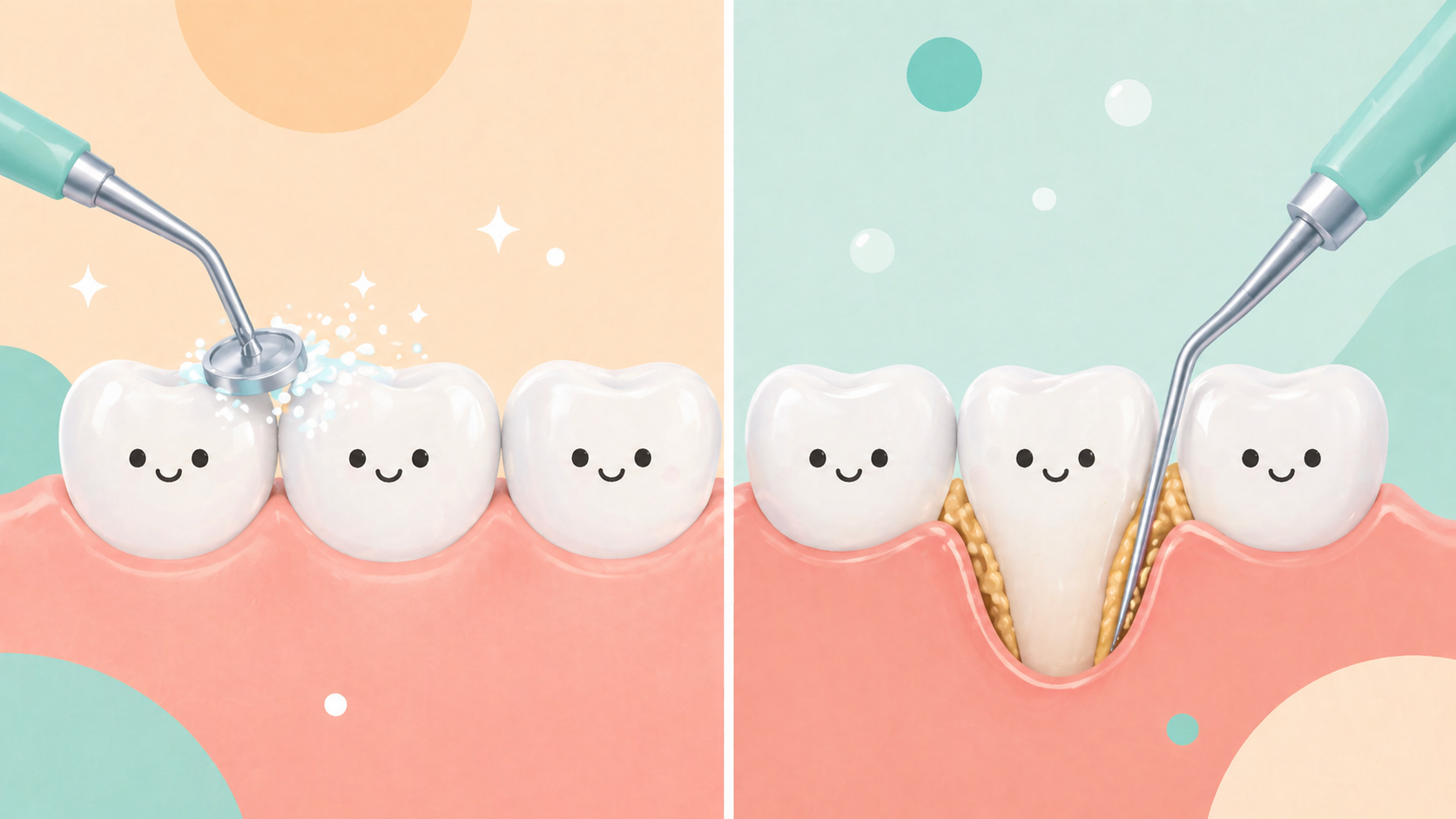
When enamel thins or gums recede, dentinal tubules the microscopic channels connecting the tooth surface to the nerve become exposed. Rod-shaped nano-hydroxyapatite physically plugs these channels, providing structural sensitivity relief rather than simply desensitizing the nerve. A double-blind randomized controlled trial confirmed that nano-HAP toothpaste produced significant reductions in cold air and tactile sensitivity scores comparable to fluoride benchmarks at both 2 and 4 weeks.
Natural Surface Brightness
Smooth, dense enamel reflects light more evenly which is why well-mineralized teeth look naturally brighter. Nano-hydroxyapatite improves surface brightness by filling microscopic enamel irregularities and restoring the smooth optical surface of healthy enamel. This is a structural improvement, not a bleaching effect which means it is compatible with daily use without the sensitivity risks associated with frequent peroxide exposure.
Addressing the "Nano" Concern Directly
The concern that "nano" automatically means dangerous is understandable but doesn't hold up scientifically. The term simply refers to particle size and in the case of rod-shaped hydroxyapatite, the small size is precisely what makes it effective. Particles in the 20-80nm range mirror the size of natural enamel crystals, allowing them to integrate with enamel surfaces in a way larger particles cannot.
The relevant safety question is not whether something is nano-sized, but whether it is biocompatible, whether it accumulates in tissues, and whether it causes cellular harm. For rod-shaped nano-hydroxyapatite, the research answers all three questions favorably it is biocompatible, does not penetrate intact oral epithelium into systemic circulation, and shows no cytotoxicity at oral care concentrations.
What to Look For in an n-HA Product

Given that particle shape is the critical safety and efficacy variable, these are the questions worth asking before choosing an n-HA toothpaste:
- Is the particle shape specified? Rod-shaped is the form with both the strongest clinical evidence and the most favorable regulatory safety profile. If a brand doesn't specify, it's worth asking why
- Is the particle size range documented? The 20-80nm range has the most clinical validation. Particles outside this range interact with enamel less predictably
- What supporting ingredients are included? Xylitol for microbiome balance, aloe vera for gum support, and natural oils for freshness complement n-HA's structural benefits
- Is it SLS-free? SLS can irritate the oral mucosa, counterproductive in a product designed to support it
SAINT Mint Toothpaste uses rod-shaped nano-hydroxyapatite in the clinically validated 20-80nm range, the particle shape and size that the peer-reviewed research and regulatory assessments both support alongside aloe vera, coconut oil, xylitol, and cold-pressed spearmint, formulated without SLS or synthetic abrasives. Both fluoride and fluoride-free versions are available.
FAQs About Nano-Hydroxyapatite Safety
1. Is nano-hydroxyapatite safe for daily use in toothpaste?
Yes, for rod-shaped particles in the 20-80nm range, the evidence supports daily use. Cytotoxicity studies have found high biocompatibility with oral tissue, tissue model research has shown it does not penetrate intact oral epithelium into systemic circulation, and it has been used in dental products in Japan for over 40 years with a strong safety record.
2. Does particle shape matter for nano-hydroxyapatite safety?
Yes, significantly. The European Scientific Committee on Consumer Safety identified needle-shaped nano-hydroxyapatite as a safety concern and recommended that it not be used in cosmetic products. Rod-shaped particles have a more favorable regulatory and research profile. Always check that a product specifies rod-shaped n-HA rather than simply listing "nano-hydroxyapatite."
3. Can nano-hydroxyapatite replace fluoride?
Clinical research has shown rod-shaped n-HA produces remineralization comparable to fluoride in direct comparison. For people who prefer a fluoride-free routine, n-HA is the most evidence-backed alternative available. Both can also be used together; they work through complementary mechanisms and are compatible in the same formula.
4. Is nano-hydroxyapatite safe for children?
Yes. Nano-hydroxyapatite has no known toxicity concerns at normal oral care concentrations, making it a well-suited ingredient for children's daily brushing. Fluoride is also safe for children when used at age-appropriate concentrations, both ingredients are compatible with a family oral care routine, and the right choice depends on personal preference and your dentist's recommendation.
5. Does nano-hydroxyapatite have any side effects?
No documented side effects have been found for rod-shaped nano-hydroxyapatite at oral care concentrations. It is biocompatible, non-cytotoxic, and does not cause mucosal irritation per published research. The absence of side effects is one of its key advantages over abrasive whitening agents and high-concentration peroxide treatments.
6. How is nano-hydroxyapatite different from regular hydroxyapatite?
The nano-scale particles in the 20-80nm range are what make the difference. At this size, the particles mirror the dimensions of natural enamel crystals, allowing them to integrate with the tooth surface effectively. Larger hydroxyapatite particles cannot achieve the same level of enamel interaction, remineralization depth, or dentinal tubule occlusion.