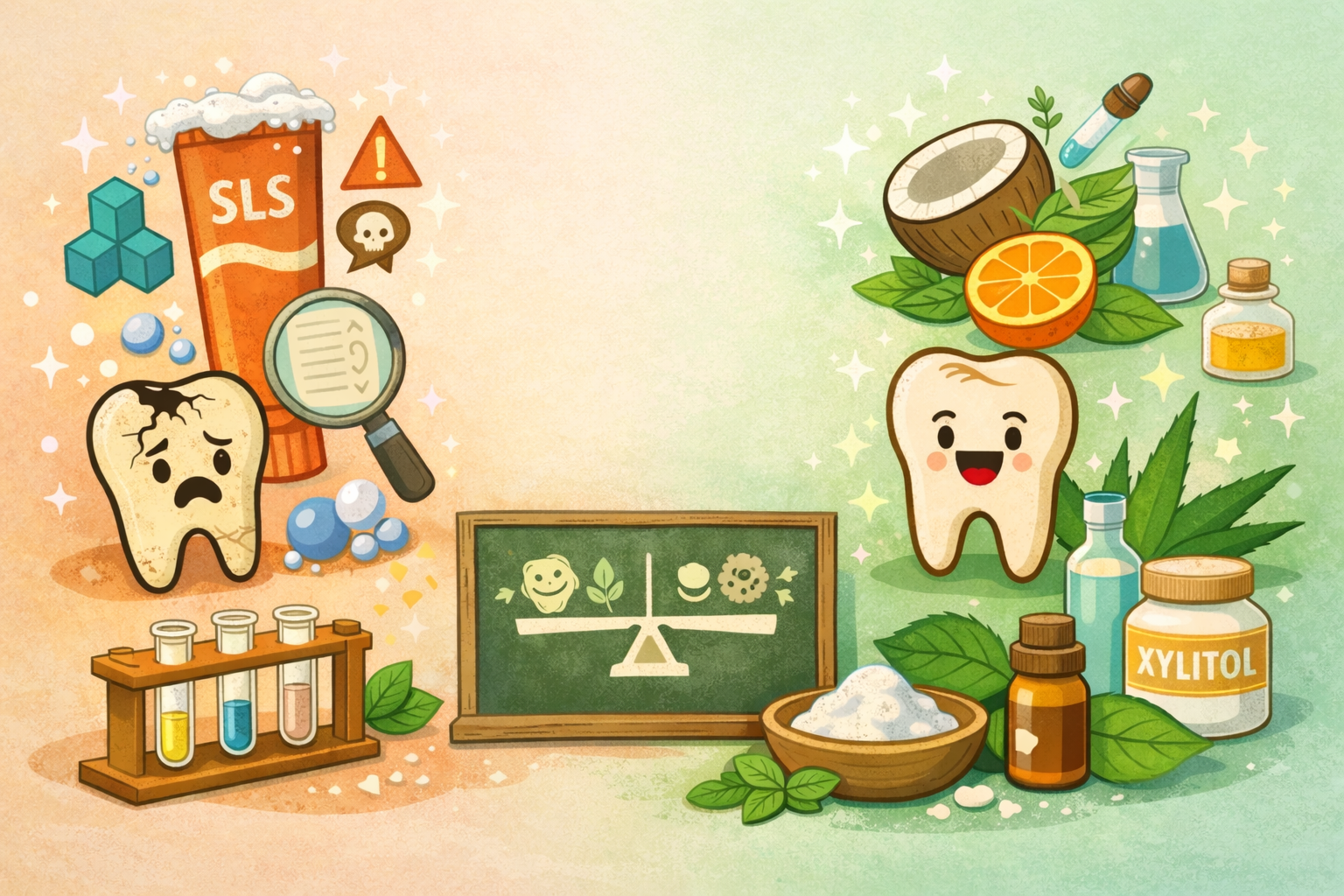
Remineralization vs. Whitening: Why Stronger Enamel Gives You a Brighter Smile
A brighter smile is a common goal, but stronger enamel should always come first. The good news is that whitening and remineralization are not opposing ideas, in the best oral care routines, they work together. Whitening improves the appearance of your teeth by reducing stains and discoloration. Remineralization restores and reinforces enamel by supplying the minerals that support tooth structure. When the two are balanced correctly, you can work toward teeth that look brighter and feel healthier at the same time.

What Is Remineralization?
Remineralization is the natural process of restoring minerals, mainly calcium and phosphate, back into tooth enamel after acids from food, drinks, and bacteria pull those minerals out. Saliva plays a major role in this cycle. Because enamel is constantly exposed to acids throughout the day, the balance between demineralization and remineralization matters continuously. When remineralization keeps up, enamel stays stronger, and early weak spots may be repaired before they become bigger problems.
A 2022 scoping review in the National Library of Medicine analyzed 28 studies on nano-hydroxyapatite dentifrices and found consistent evidence of remineralization effects, including caries prevention, reduced demineralization, and enamel repair, making remineralizing ingredients one of the most significant developments in modern preventive dental care.
What Is Whitening, Really?
Whitening is about improving tooth color, but not all whitening works the same way.
Some whitening approaches target surface stains, also called extrinsic stains, which build up from coffee, tea, red wine, tobacco, and deeply pigmented foods. These can often be reduced through stain-lifting ingredients, gentle polishing agents, and consistent brushing habits.
Other whitening approaches work on deeper discoloration, sometimes called intrinsic staining. In these cases, peroxide-based whitening systems are commonly used. At dentist-calibrated concentrations, peroxide-containing products are a well-established and effective whitening approach. It is confirmed that sensitivity outcomes are directly concentration-dependent, meaning that properly formulated, lower-concentration peroxide delivers effective whitening with minimal enamel stress.
Whitening is not inherently harsh. The key is choosing the right method, the right amount, and the right frequency for your enamel, sensitivity level, and goals.
Remineralization and Whitening Are Not Opposites
A common misconception is that you have to choose between stronger teeth and whiter teeth. In reality, the healthiest whitening routines usually start with enamel support.
When enamel is smooth, intact, and well mineralized, it reflects light better and naturally looks healthier and brighter. On the other hand, rough, weakened, or dehydrated enamel appears dull, uneven, or more yellow, even when technically clean. That means a smile can look less bright despite good brushing habits, simply because the enamel surface itself is compromised.
This is why remineralization matters so much in any whitening conversation. A formula that supports enamel can improve the appearance of teeth over time by smoothing the surface and reinforcing weak areas, while also helping reduce the sensitivity that sometimes makes whitening harder to tolerate.
|
|
Remineralization |
Whitening |
|
Primary goal |
Restore mineral density and strengthen enamel |
Reduce stains and improve tooth color |
|
Key ingredients |
Nano-hydroxyapatite, calcium, phosphate, fluoride |
Peroxide (intrinsic), bromelain and turmeric (surface) |
|
Effect on appearance |
Smoother, more light-reflective enamel surface |
Reduces discoloration directly |
|
Effect on sensitivity |
Reduces sensitivity by sealing dentinal tubules |
Can increase sensitivity if overused or poorly formulated |
|
Frequency |
Daily- cumulative benefit |
Periodic- matched to tolerance and goals |
|
Work together? |
Yes- remineralization supports and enhances whitening results |
Yes- whitening works better on healthy, smooth enamel |
Why Enamel Protection Should Come First

Enamel is the outer protective layer of the tooth, and unlike skin, the body cannot regrow significantly lost enamel. That is why daily habits that protect and reinforce enamel are so important.
Overbrushing, highly abrasive products, acidic diets, dry mouth, and whitening without adequate enamel support can all make teeth feel more sensitive or look less healthy over time. That does not mean whitening should be avoided, it means whitening should be done thoughtfully. The smartest approach is not the most aggressive one. It is the one that supports the tooth surface while improving color gradually and safely.
How Nano-Hydroxyapatite Supports Both Goals
Nano-hydroxyapatite is one of the most well-researched ingredients in the remineralization conversation because it is the same mineral family that makes up the majority of tooth enamel and dentin. In oral care, nano-hydroxyapatite is used as a biomimetic ingredient, designed to work in a way that mirrors the mineral structure of the tooth itself.
From a cosmetic perspective, nano-hydroxyapatite can help teeth appear brighter over time, not by bleaching, but by smoothing the enamel surface, filling microscopic irregularities, and supporting a more light-reflective tooth surface. This is a structural brightness improvement rather than a chemical one, which means it is compatible with daily use without the sensitivity risk associated with frequent peroxide exposure.
Is Whitening Safe for Enamel?
Whitening can be fully compatible with enamel health when the formula and usage are appropriate.
Peroxide-based whitening is the most effective approach for active stain removal and color change; it penetrates enamel to oxidize embedded stain molecules. Published reviews describe it as safe and effective when used correctly, with tooth sensitivity and temporary gum irritation being the most commonly reported side effects, both of which are concentration and frequency-dependent.
For people focused on a gentler or sensitivity-conscious routine, non-peroxide options using enzymatic stain lifters like bromelain and white turmeric provide meaningful surface stain reduction without the enamel exposure of peroxide-based systems. The best choice depends on the person and the formula, and pairing either approach with daily nano-hydroxyapatite use helps protect enamel throughout.
The Difference Between Whitening Fast and Whitening Well

Fast whitening is usually focused on a dramatic color change in a short amount of time. Whitening well is focused on stain reduction, enamel support, comfort, and consistency.
For most people, the best long-term results come from combining a toothpaste that supports remineralization daily with a whitening strategy, whether peroxide-based or enzyme-based, that fits their sensitivity level. This approach typically creates a more sustainable result: teeth not only look brighter, they feel smoother, less reactive, and healthier overall.
It is also worth remembering that not every yellow tone is a stain problem. Sometimes teeth look darker because enamel is thinner, dehydrated, or rougher, allowing the naturally yellower dentin underneath to show through. In those cases, enamel remineralization matters just as much as, or more than, stain removal.
Daily Habits That Support Stronger, Whiter Teeth
- Brush twice daily for two full minutes with a toothpaste that includes enamel-supportive ingredients. Rod-shaped nano-hydroxyapatite in the 20-80nm range actively delivers calcium and phosphate to enamel surfaces, rebuilding mineral density with each use.
- Choose whitening that matches your tolerance. Peroxide-based systems are the most effective for active color change at the right concentration. Enzyme-based options like bromelain and white turmeric work on surface stains more gradually and are better suited for sensitivity-prone teeth. Both are valid, the right choice depends on your goals and comfort level.
- Avoid relying on harsh abrasion. Some whitening toothpastes achieve brightness by aggressively polishing enamel. Remineralization, rebuilding enamel from within, as a more sustainable approach to surface brightness over time.
- Floss daily. Surface brightness is not only about the front of the teeth. Plaque and buildup between teeth affect how clean and healthy the full smile looks.
- Stay hydrated and mind your pH. Saliva buffers acids and actively supports remineralization. Frequent acidic snacking or dry mouth limits the window for natural enamel recovery.
- Be consistent. Remineralization is not a one-time event. Like fitness or skincare, it works best when it becomes part of a daily routine.
FAQs About Remineralization and Whitening
1. What is the difference between remineralization and whitening?
Remineralization helps restore lost minerals to enamel and strengthen the tooth surface. Whitening focuses on improving tooth color by reducing stains or lightening discoloration. Both are important, and they work better together than separately.
2. Can I whiten my teeth without damaging enamel?
Yes. Whitening is enamel-compatible when the method is appropriate, the product is used as directed, and your routine includes enamel-supportive care. Pairing whitening with a daily nano-hydroxyapatite toothpaste helps protect and rebuild enamel throughout the whitening process.
3. Does nano-hydroxyapatite whiten teeth?
Not through bleaching. Nano-hydroxyapatite helps teeth appear brighter by supporting a smoother, healthier, more light-reflective enamel surface and by reducing sensitivity. The brightness improvement is structural rather than chemical, which makes it suitable for daily use without sensitivity risk.
4. Is peroxide always too harsh for sensitive teeth?
Not necessarily. Sensitivity is concentration-dependent, properly formulated, lower-concentration peroxide can be effective and well-tolerated. People with significant sensitivity may still prefer enzyme-based alternatives. The right approach depends on the individual and the formulation.
5. Which should come first in my routine: remineralization or whitening?
For most people, enamel support should be the daily foundation. A remineralizing toothpaste used consistently creates a healthier surface, which makes whitening feel more comfortable, look better, and last longer. Whitening is most effective when applied to well-mineralized, smooth enamel rather than weakened or porous enamel.