Oral Care Ingredients: What to Watch For and What to Look For
Most people evaluate oral care products by brand familiarity or taste. But the ingredient list tells a more complete story, one that affects enamel strength, gum health, and the long-term balance of bacteria in your mouth. Some commonly used ingredients are fine at the right dose and formulation. Others are worth understanding more carefully before making them part of your daily routine.
This guide covers the ingredients worth knowing about, the research behind the concerns, and the alternatives that modern dentist-formulated products use in their place.
Why Oral Care Ingredients Matter More Than Most People Realize

Your mouth contains a complex ecosystem, the oral microbiome comprising hundreds of bacterial species in a carefully maintained balance. When this balance is disrupted by harsh ingredients, it can contribute to issues including tooth sensitivity, gum irritation, dry mouth, and plaque overgrowth. The goal of a well-formulated oral care product is to clean effectively while maintaining or actively supporting this ecosystem.
The distinction that matters most is between ingredients that clean through disruption and those that clean through support. Both can remove plaque, but only one does so without collateral effects on enamel, gum tissue, and beneficial bacteria.
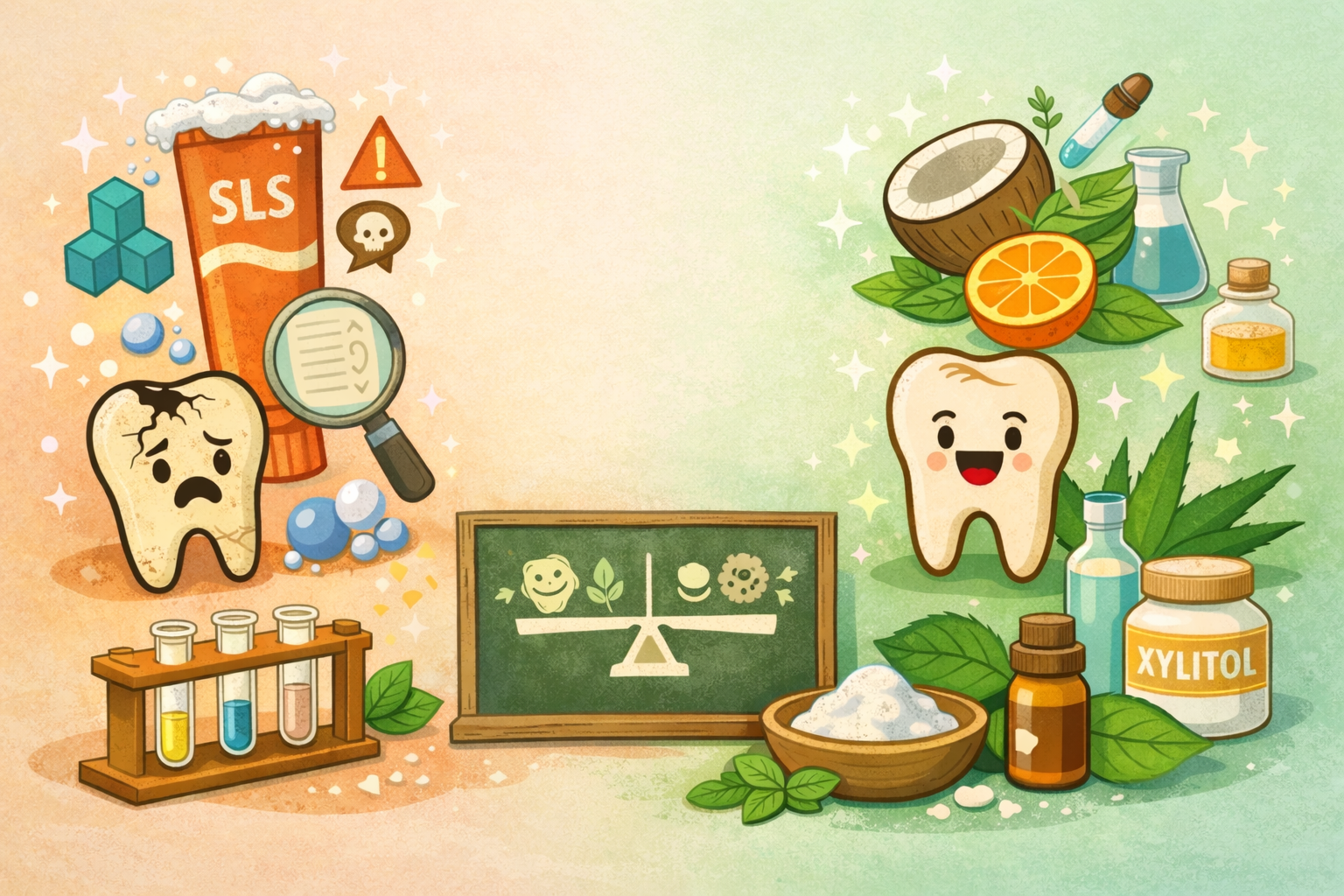
SLS: Why Foam Isn't Always Your Friend
Sodium Lauryl Sulfate (SLS) is a synthetic surfactant added to most conventional toothpastes primarily to create the foamy lather people associate with cleaning. It does help produce foam, but the foam itself does not clean teeth. Mechanical brushing does. SLS is there for perception, not function.
The research concern with SLS centers on its effect on the oral mucosa. SLS denatures the mucosal protein layer that lines the inside of the mouth, temporarily stripping away a protective barrier. A study analyzed four randomized controlled trials and found that SLS-free toothpaste statistically significantly reduced the number of ulcers, duration of ulcers, number of episodes, and ulcer pain in patients with recurrent aphthous stomatitis canker sores. An earlier study found that switching from an SLS-containing toothpaste to an SLS-free formula reduced aphthous ulcer incidence from 14.3 to 5.1 over three months. A 2019 systematic review in the National Library of Medicine
For people who don't experience canker sores, SLS may be a non-issue. But for those with sensitive oral tissue, gum irritation, or mouth ulcer history, it is a straightforward ingredient to avoid, with no loss of cleaning efficacy, it is formulated without SLS, using a gentle foaming system that cleans thoroughly without compromising the mucosal layer.
Peroxide: Effective at the Right Concentration
Hydrogen peroxide and carbamide peroxide are the only clinically proven ingredients that actively change tooth color. They penetrate enamel to oxidize stain molecules that have embedded in the dentin layer. At dentist-calibrated concentrations, this is a safe and effective mechanism. The concerns around peroxide are specifically about dose and frequency, not the ingredient itself.
The distinction that matters for product selection is not peroxide vs. no peroxide; it is well-formulated peroxide vs. poorly formulated peroxide. Products that use dentist-calibrated, lower-concentration peroxide alongside enamel-supporting ingredients like nano-hydroxyapatite deliver effective whitening while protecting the tooth structure underneath. This is the approach used in pairing peroxide at the right concentration with bromelain, coconut oil, and white turmeric for effective stain removal that works with enamel rather than against it.
Abrasives: The RDA Number Most Brands Don't Mention

Whitening toothpastes often rely on abrasive particles to physically scrub stains from enamel. The measure of a toothpaste's abrasivity is its Relative Dentin Abrasivity (RDA) score. The ADA recommends staying below an RDA of 250; most dentists recommend under 70 for daily use. Many conventional whitening toothpastes sit between 100 and 200.
The problem with high-abrasivity formulas used daily is cumulative: enamel is irreplaceable. Once worn away, it does not regenerate. Thinner enamel means more exposed dentin, which appears more yellow and is more sensitive to temperature and acidity. In other words, aggressive, abrasive whitening can gradually make teeth both more yellow and more sensitive over time.
The alternative is remineralization rather than abrasion. has shown that rod-shaped n-HA in the 20-80nm range actively rebuilds enamel mineral density, filling microscopic surface defects, strengthening tooth structure, and creating a smoother surface that reflects light more evenly. This is a fundamentally different mechanism: instead of scrubbing the surface whiter, it makes the enamel structurally better at appearing bright.
Artificial Additives and Synthetic Flavors
Synthetic flavoring agents and artificial sweeteners are common in conventional oral care products, primarily to mask the taste of active ingredients and create a strong sensory experience. For most people, these are low-concern. But for those with sensitive gum tissue, dry mouth conditions, or reactivity to synthetic compounds, they can contribute to irritation without adding any oral health benefit.
The alternative ingredients that have taken their place in modern formulations have actual documented oral health properties:
• Plant-derived xylitol: More than a sweetener. Xylitol reduces Streptococcus mutans levels by entering the bacterial cell via a fructose transport system and producing a compound that the bacteria cannot metabolize, creating an energy drain that inhibits growth and adhesion. A confirmed significant reduction in both S. mutans and S. sobrinus in the xylitol group, with no effect on beneficial oral bacteria a genuine selective antimicrobial action.
• Cold-pressed spearmint: Provides freshness through natural volatile compounds rather than synthetic menthol. Lower irritation potential for sensitive oral tissue while still delivering effective breath freshening.
• Tea tree oil: Contains terpinen-4-ol, a compound with documented antimicrobial properties against a range of oral pathogens. Used at appropriate concentrations in oral care, it supports antibacterial action without the mucosal disruption of synthetic surfactants.
Ingredients Worth Seeking Out
Understanding what to avoid is only half the picture. The more useful framework is knowing which ingredients actively support oral health rather than simply avoiding harming it. Here is a quick reference:
|
Ingredient |
The Concern |
The Better Approach |
|
SLS (Sodium Lauryl Sulfate) |
May trigger or worsen mouth ulcers in sensitive individuals; denatures the oral mucosal layer |
Gentle, SLS-free foaming systems that clean effectively without mucosal irritation |
|
High-concentration peroxide |
At excessive doses or frequency, can cause sensitivity and temporary enamel dehydration |
Dentist-calibrated, lower-concentration peroxide that balances whitening with enamel comfort |
|
Harsh abrasives (high RDA) |
Excessive abrasivity wears enamel over time enamel cannot regenerate once lost |
Nano-hydroxyapatite, which remineralizes rather than abrades |
|
Artificial sweeteners and synthetic flavors |
Can irritate sensitive oral tissues; offer no oral health benefit |
Plant-derived xylitol, cold-pressed spearmint, and botanical oils |
Ingredients That Work: The Evidence
Nano-hydroxyapatite
Rod-shaped nano-hydroxyapatite in the 20-80nm range is the most structurally similar synthetic mineral to natural tooth enamel. It binds to enamel surfaces, fills microscopic defects, and actively delivers calcium and phosphate to remineralize areas of early mineral loss.
Coconut Oil
Coconut oil's lauric acid content gives it documented antimicrobial properties against cavity-causing bacteria. Clinical trials have shown statistically significant reductions in plaque index and gingival scores with consistent use. In a well-formulated product, coconut oil also serves as a biocompatible carrier that supports other active ingredients, particularly in whitening formulas where it helps create better conditions for stain-lifting actives to work.
Aloe Vera
Aloe vera's anti-inflammatory and antimicrobial properties make it a well-suited ingredient for gum support. A randomized controlled trial found aloe vera toothpaste produced equivalent gingival index improvements to fluoride toothpaste over 30 days, making it a meaningful contributor to gum health rather than just a soothing additive.
Xylitol
Beyond its sweetening function, plant-derived xylitol has a selective antimicrobial mechanism: it reduces harmful cariogenic bacteria without affecting beneficial oral species. This makes it genuinely microbiome-supportive in a way that broad-spectrum antimicrobials are not. Clinical evidence supports its use as a daily cavity-prevention ingredient.
Building a Routine Around Better Ingredients

A well-designed oral care routine doesn't require complexity. The key is selecting products where every ingredient earns its place either cleaning effectively, supporting enamel, maintaining the microbiome, or all three at once.
• Daily toothpaste: Look for SLS-free formulas with nano-hydroxyapatite, xylitol, and plant-based antimicrobials. combines rod-shaped n-HA, coconut oil, aloe vera, xylitol, tea tree oil, and cold-pressed spearmint formulated without SLS, parabens, or synthetic abrasives.
• Whitening: Choose products that pair dentist-calibrated peroxide with enamel-supportive ingredients like n-HA, bromelain, and coconut oil. Effective whitening doesn't require harsh formulations it requires the right concentration and the right supporting ingredients.
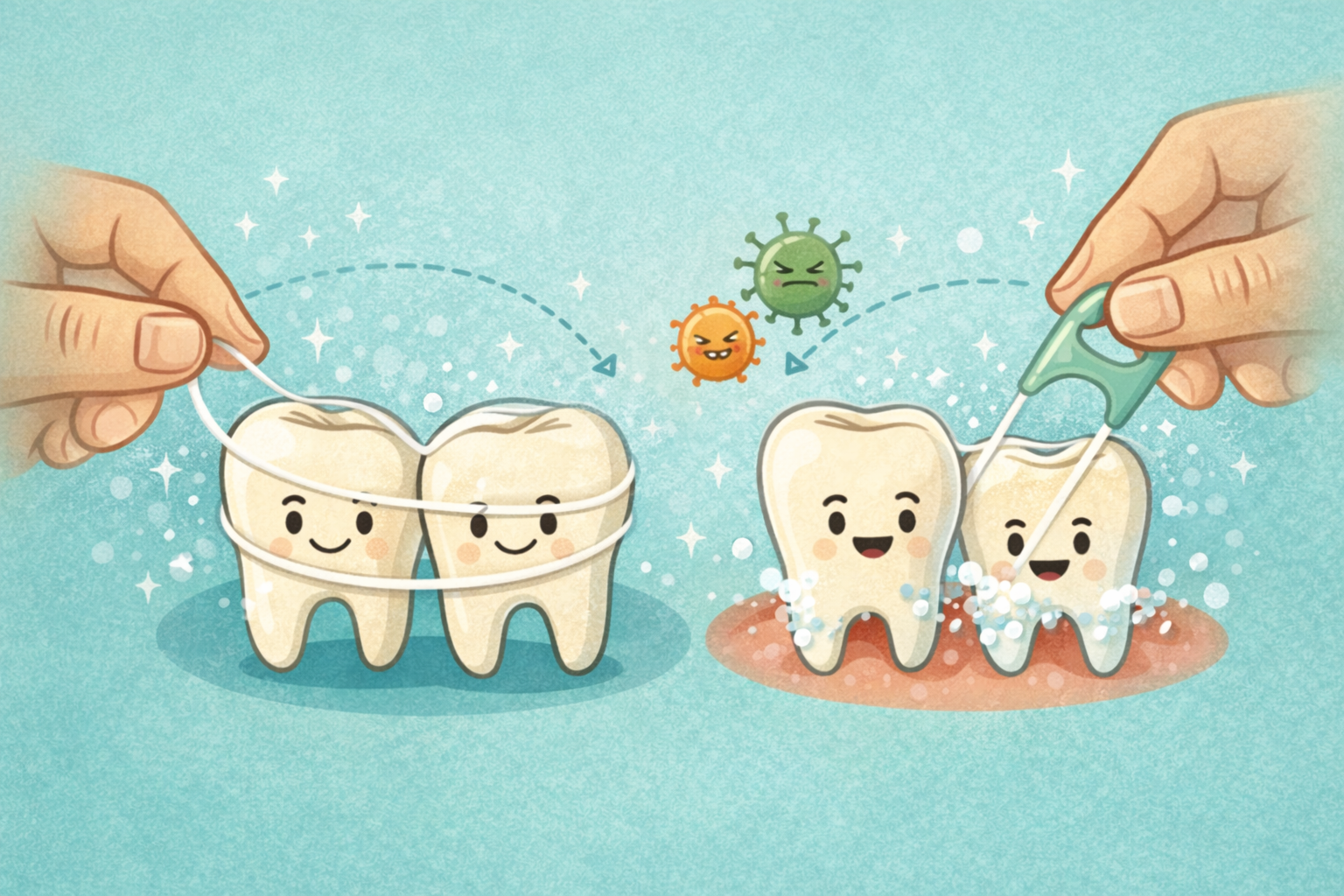
• Flossing: Coconut-oil-infused floss extends antimicrobial protection into the interproximal spaces where plaque accumulates between teeth.
• Tongue cleaning: A stainless steel tongue scraper removes the bacterial film on the tongue that contributes to both odor and a dull oral environment, a step most people skip but that makes a measurable difference.
FAQs About Oral Care Ingredients
1. What is the problem with SLS in toothpaste?
SLS denatures the mucosal protein layer in the mouth, which can trigger or worsen mouth ulcers in sensitive individuals. An SLS-free toothpaste significantly reduced the number, duration, and pain of canker sores. For people without sensitivity to SLS, it is less of a concern, but it offers no cleaning benefit over SLS-free alternatives.
2. Is peroxide in whitening products safe?
Yes, at the right concentration and frequency. Peroxide is the only ingredient that directly changes tooth color, and at dentist-calibrated, lower concentrations, it is both effective and safe. The concern is with excessive concentrations used too frequently. This is why well-formulated whitening products specify concentration carefully rather than maximizing it.
3. What is nano-hydroxyapatite, and why is it used in toothpaste?
Nano-hydroxyapatite is a bioidentical mineral that mirrors the natural composition of tooth enamel. Rod-shaped n-HA in the 20-80nm range actively remineralizes enamel by filling microscopic surface defects and delivering calcium and phosphate to areas of mineral loss. has confirmed its remineralization efficacy is comparable to fluoride, making it the most evidence-backed option for strengthening enamel without bleaching or abrasion.
4. Does xylitol actually prevent cavities?
Yes, through a specific antimicrobial mechanism. Xylitol enters Streptococcus mutans cells via the same transport system as fructose, but cannot be metabolized, creating an energy drain that inhibits bacterial growth and adhesion to tooth surfaces. confirms significant reductions in cariogenic bacteria with no effect on beneficial oral species, a genuinely selective action.
5. Is coconut oil in toothpaste effective?
Yes. Coconut oil's lauric acid content gives it documented antimicrobial activity against plaque-forming and cavity-causing bacteria. have confirmed measurable reductions in plaque and gingival inflammation. In a well-formulated toothpaste, it also acts as a biocompatible carrier that supports the other active ingredients in the formula
6. How do I know if a toothpaste is too abrasive?
Look for the RDA (Relative Dentin Abrasivity) score. Most dentists recommend staying under 70 for daily use; anything above 150 carries a meaningful enamel wear risk over time. If a brand doesn't publish its RDA, that is itself informative. Toothpastes formulated around nano-hydroxyapatite remineralize rather than abrade a fundamentally different approach to surface brightness.