Coffee Drinkers: How to Prevent Yellow Teeth Without Giving Up Coffee
Do you like coffee but worry about stains? Learn how to prevent yellowing of the teeth without giving up coffee. Learn the science underlying enamel maintenance, acidity, and pigmentation, as well as practical tips from dentists for a whiter smile.

Why Coffee Causes Yellow Teeth
Even though coffee is the most widely consumed morning beverage worldwide, it is well known to cause yellow teeth. The cause is its chemical composition, which includes tannins, chromogens, and acidic compounds that can eventually stick to enamel.
Coffee causes tiny pigment molecules to stick to your enamel. Over time, these pigments seep into the porous surface, causing discoloration. A darker, more concentrated brew is more likely to get stains.
The Role of Pigments (Tannins)
Natural plant substances called tannins, which also have strong pigment-binding properties, give coffee its strong flavor. These polyphenols have the capacity to stick to the enamel's surface proteins, creating a yellowish layer that gradually deepens with continued coffee consumption.
How Acidity Affects Enamel
Coffee typically has a pH between 4.5 and 5.0, which is slightly acidic. This acidity softens your enamel, making it more vulnerable to erosion and discoloration for a while. Brushing immediately after drinking coffee can actually exacerbate the problem because you're brushing softened enamel that hasn't yet re-hardened.
Understanding the pH Connection
Your mouth should have a pH between 7.0 and 7.5, which is slightly alkaline. When you drink acidic beverages like coffee, your oral environment temporarily becomes acidic. This imbalance weakens your enamel, damages your oral microbiota, and increases your sensitivity.
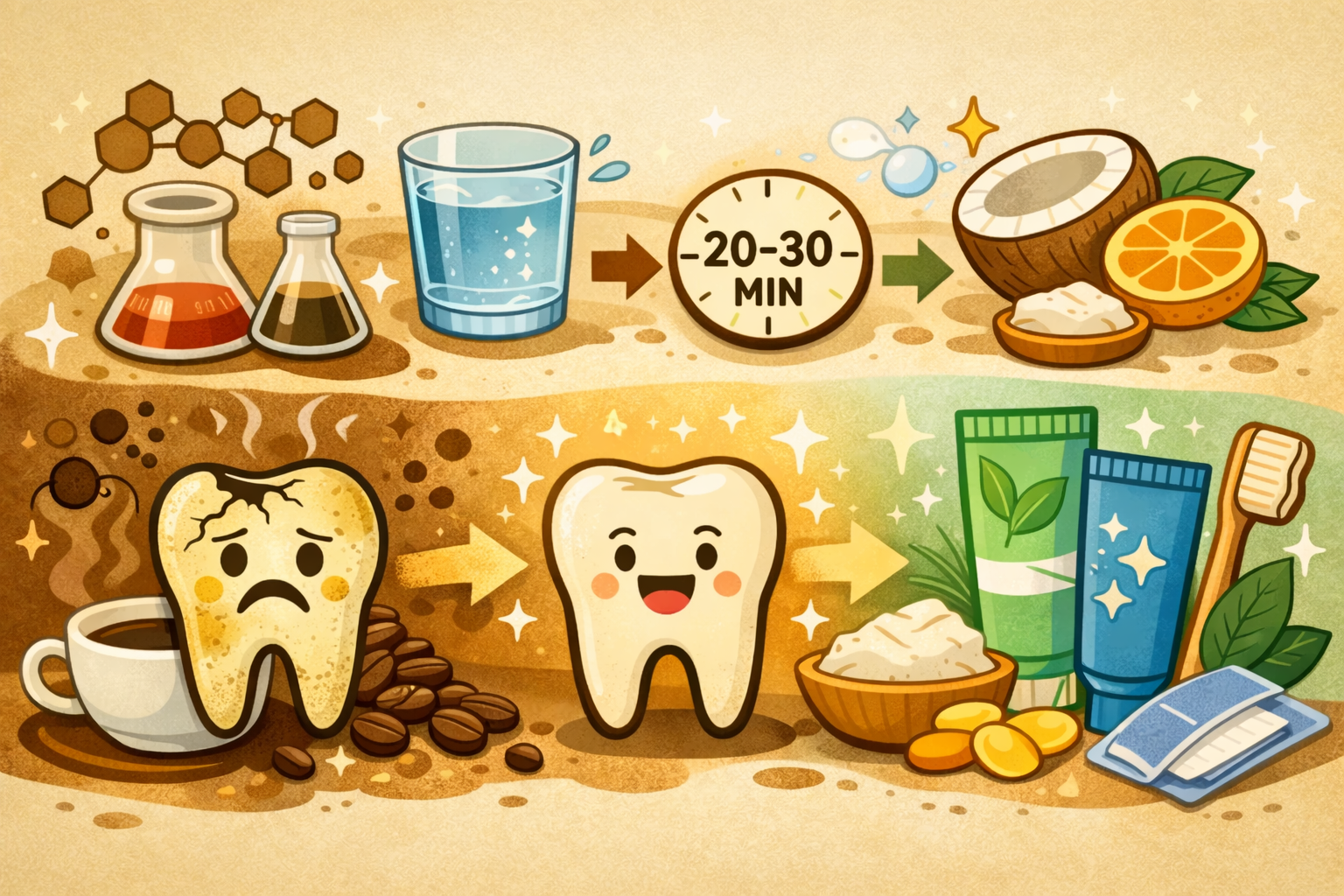
This is where coffee drinkers can apply the simple yet scientifically proven "Rinse → Wait → Brush → Remineralize" technique.
Step 1: Rinse After Every Cup
Right after finishing your coffee, rinse with plain water or a pH-balancing mouth rinse. This dilutes the acids and washes away most pigments before they can stick.
Step 2: Wait Before Brushing
Wait at least 20–30 minutes before brushing. This allows your saliva to naturally neutralize acidity and begin re-hardening enamel minerals. Brushing too soon can cause microscopic enamel loss over time.
Step 3: Brush With a Remineralizing Formula
Once your enamel has recovered, use a toothpaste rich in nano-hydroxyapatite (n-HA). With alkaline pH of 9, it helps neutralize leftover acidity while gently restoring enamel minerals. n-HA mimics your tooth’s natural structure, filling in tiny pores that pigments would otherwise cling to.
Step 4: Remineralize and Protect
Finish your routine with gentle brushing motions and avoid harsh scrubbing. Over time, this strengthens your enamel, making it more stain-resistant and less sensitive to coffee acids.
Weekly Whitening Mini-Protocol
If you drink several cups a day, you can maintain white teeth without resorting to harsh bleaching by following a regular mini-whitening routine.
Natural Whitening Ingredients
To safely remove surface stains, look for non-toxic, peroxide-free whitening solutions that employ natural ingredients like coconut oil, white turmeric, and bromelain. Coconut oil purifies lipids, turmeric brightens, and pineapple's bromelain enzyme gently dissolves stain molecules.

How to Safely Use Whitening Strips
You can use SAINT Whitening Strips once or twice a week. These strips contain natural brighteners that polish without irritating the skin, such as Dead Sea salt and bromelain. Always use a remineralizing toothpaste afterward to maintain strong enamel.
Complementary Care Habits
Pair whitening with SAINT Floss (infused with coconut oil and xylitol) to remove pigment-trapping plaque, and a tongue scraper to reduce bacterial buildup that can dull your smile. These steps ensure your entire mouth stays clean and balanced.
Everyday Habits That Reduce Staining
Drink Smart
Use a straw for iced coffee and try to finish your hot cup within 15–20 minutes instead of sipping for hours. The less time your teeth are in contact with the liquid, the fewer stains you’ll accumulate.
Stay Hydrated
Alternating sips of water between coffee helps rinse pigments and maintain saliva flow, which naturally protects enamel.
The Power of Consistent Oral Care
A gentle, consistent oral routine is the best long-term defense. Combine an alkaline toothpaste, soft-bristled brush, natural floss, and stainless-steel tongue scraper for total oral wellness.
Why Gentle, Alkaline Formulas Matter
The Science of Nano-Hydroxyapatite
The mineral that makes up your enamel is called nano-hydroxyapatite, or n-HA. By repairing microcracks and restoring enamel gloss, it produces a surface that naturally resists coffee stains.
Supporting Oral Microbiome Balance
SAINT Mint Toothpaste and other mild formulas preserve a balanced oral microbiome, which is essential for healthy gums, fresh breath, and long-term enamel protection, in contrast to conventional whitening toothpastes that use peroxides or SLS.
Final Thoughts
If you follow the proper care regimen, you can keep your smile looking great and healthy without giving up coffee. You can confidently enjoy your daily cup of coffee by knowing the science behind the interaction between coffee's acidity and pigments and by using mild, remineralizing formulas to support your enamel.
Rinse, wait, brush, and remineralize: small, deliberate actions that have a big impact.
A bright smile and your morning coffee? You can absolutely have both.
FAQs
1. Why does coffee stain teeth?
Coffee contains tannins, which bind to enamel and cause yellowish stains over time, especially when enamel is softened by acidity.
2. Is brushing right after coffee bad?
Yes. Coffee’s acidity softens enamel, and brushing immediately can erode it. Wait 20-30 minutes before brushing.
3. What type of toothpaste is best for coffee drinkers?
A remineralizing, alkaline toothpaste with nano-hydroxyapatite (n-HA) is ideal for neutralizing acid and strengthening enamel.
4. Can natural whitening ingredients actually work?
Yes. Coconut oil, turmeric, and bromelain help lift surface stains without sensitivity or damage.
5. How often should I use whitening strips?
Once or twice a week is enough for maintenance. Always pair with a gentle daily toothpaste to keep enamel strong.
6. Do I need to give up coffee completely?
Not at all. With smart habits- rinsing, waiting, and brushing properly, you can enjoy coffee without yellow stains.