Is Coconut Oil Good for Your Teeth? What the Science Actually Says
Coconut oil has become a common ingredient in premium oral care products, but the claims around it vary widely. Some are well-supported by research. Others, particularly around whitening, are overstated. This article focuses on what coconut oil genuinely does for your teeth, where its limitations are, and how it fits into a complete oral care routine.
What Makes Coconut Oil Relevant to Oral Health

The active component in coconut oil that matters for oral health is lauric acid, a medium-chain fatty acid making up roughly 45-50% of coconut oil's composition. Lauric acid has documented antimicrobial properties, it disrupts the cell membranes of certain bacteria, making it harder for them to colonize oral surfaces and form plaque.
When coconut oil contacts saliva, lauric acid undergoes saponification, forming a soap-like compound that helps loosen the bacterial film coating tooth surfaces. This is the core mechanism behind its oral health benefits, and it is backed by multiple peer-reviewed studies. A 2015 clinical trial in the National Library of Medicine found statistically significant reductions in both plaque index and gingival inflammation scores after 30 days of coconut oil use. A 2016 study in the National Library of Medicine found coconut oil produced reductions in Streptococcus mutans, the primary bacteria behind plaque and cavities, comparable to chlorhexidine mouthwash.
These are legitimate, replicated findings. The antimicrobial and plaque-reduction benefits of coconut oil in oral care are well-supported by the evidence.
What Role Does Coconut Oil Actually Play in Whitening?

Coconut oil is not a bleaching agent, it does not chemically alter the intrinsic color of enamel or dentin on its own. What it does is play a foundational supporting role in a whitening formula: keeping the tooth surface clean, reducing the bacterial film that traps staining pigments, and acting as a biocompatible carrier that helps other active ingredients do their job more effectively.
Think of it this way: a tooth surface covered in plaque and bacterial film is harder to whiten and re-stains faster. Coconut oil addresses that layer consistently, so that when peroxide lifts stains or bromelain breaks down pigment-binding proteins, the results are cleaner and last longer. Coconut oil does not whiten teeth alone, but it makes every other whitening ingredient in a formula work better.
This is why well-formulated products include coconut oil alongside active whitening ingredients rather than relying on it as a standalone brightening agent.
Coconut Oil and Peroxide: Complementary, Not Competing
Coconut oil and peroxide are often framed as an either-or choice, but that misunderstands how each works. They serve different roles and work best together.
Peroxide, at the right concentration, is the most effective ingredient available for active stain removal and tooth brightening. It is the only ingredient that directly changes tooth color. The key phrase is at the right concentration. A 2020 review in the Journal of Esthetic and Restorative Dentistry confirmed that sensitivity outcomes are concentration-dependent, meaning that dentist-calibrated, lower-concentration formulas can deliver meaningful whitening results with minimal risk. This is exactly why well-formulated products use peroxide carefully rather than avoiding it or maximizing it.
Coconut oil handles what peroxide cannot, daily antimicrobial maintenance, surface cleanliness, and supporting a healthy oral environment. Peroxide handles what coconut oil cannot, actively lifting embedded stains and changing tooth brightness. A complete oral care routine uses both.
|
Feature |
Coconut Oil |
Peroxide (at the right concentration) |
|
Primary mechanism |
Antimicrobial via lauric acid; reduces bacterial load and surface buildup |
Chemically lifts stains from enamel and dentin |
|
Role in routine |
Daily maintenance, keeps surfaces clean and reduces plaque |
Targeted whitening, actively removes embedded stains |
|
Concentration matters? |
No, consistent daily use drives results |
Yes, dentist-calibrated concentrations are safe and effective; high concentrations carry sensitivity risk |
|
Effect on enamel |
Biocompatible, no structural impact |
Safe at appropriate concentrations; aggressive overuse can cause sensitivity |
|
Best use case |
Everyday brushing and flossing |
Whitening strips and targeted treatments at the right dose |
|
Together? |
Yes, complementary |
Yes, complementary |
The bottom line: coconut oil for daily maintenance, responsibly formulated peroxide for targeted whitening. These are not competing philosophies, they are two parts of the same well-designed routine.
What Ingredients Pair Well with Coconut Oil
Coconut oil performs best in formulas that pair it with ingredients targeting what it cannot do alone, particularly enamel remineralization and enzymatic stain support. The most evidence-backed combinations include:
-
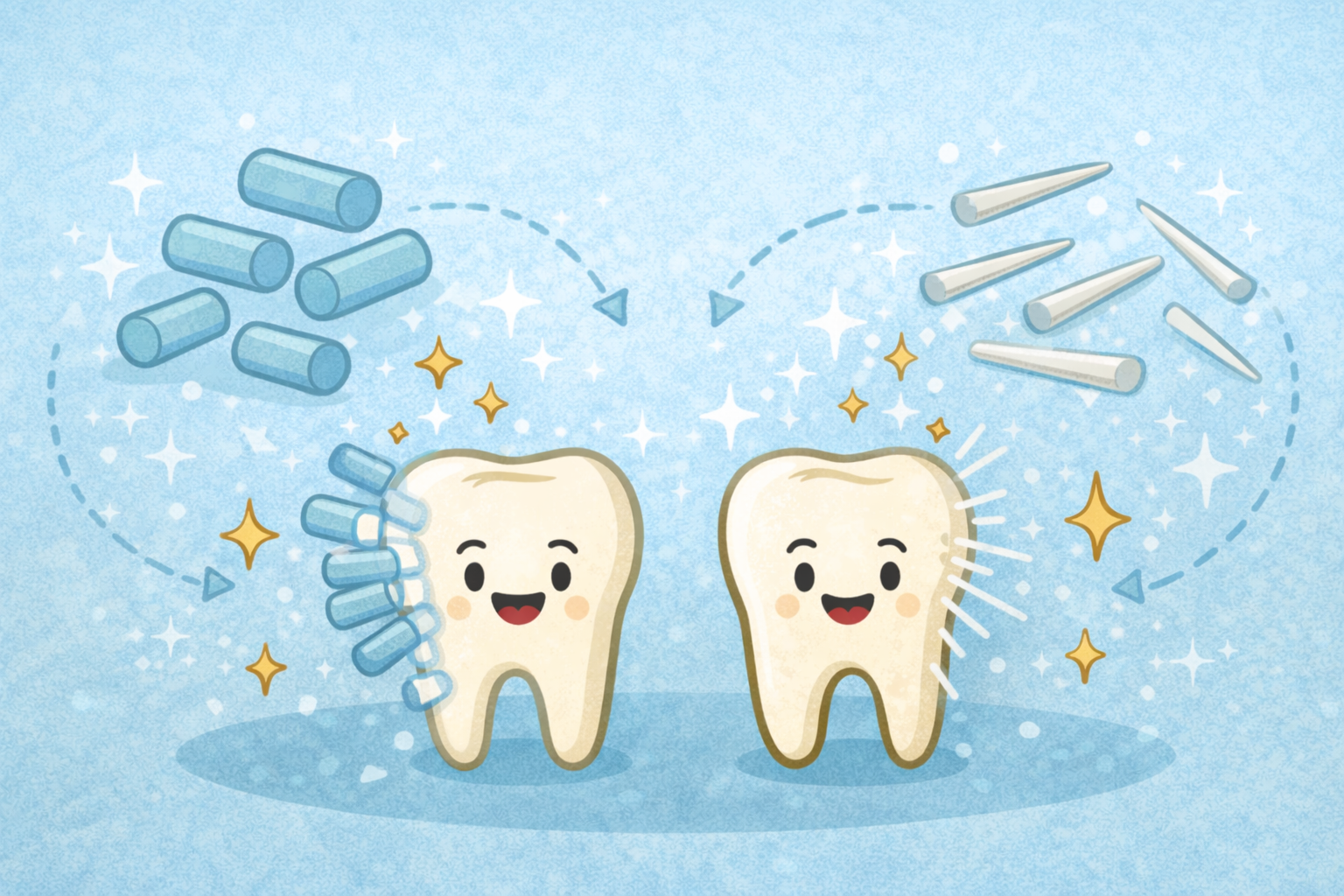
Nano-hydroxyapatite (n-HA): The most important pairing. While coconut oil keeps bacterial film reduced, n-HA rebuilds mineral density in the enamel itself, creating a denser, smoother surface that both reflects light better and gives staining pigments fewer micropores to settle into. Clinical research has confirmed rod-shaped n-HA in the 20-80nm range remineralizes enamel comparably to fluoride.
-
Bromelain: A proteolytic enzyme from pineapple that breaks down the protein matrix binding chromogens to enamel. It is found that bromelain-based stain lifting is effective and non-abrasive, providing enzymatic stain removal that complements both coconut oil's cleaning action and peroxide's brightening effect.
-
Aloe vera: Supports gingival health and reduces inflammation. A randomized controlled trial found aloe vera toothpaste produced equivalent gingival improvements to fluoride toothpaste over 30 days.
-
Xylitol: A naturally derived sugar alcohol that reduces Streptococcus mutans adhesion through a complementary pathway to lauric acid, reinforcing the antimicrobial benefit.
-
White turmeric (Curcuma zedoaria): Distinct from yellow turmeric, which stains, white turmeric helps reduce surface pigmentation through anti-inflammatory properties without any staining risk.
This multi-ingredient approach is the philosophy behind SAINT Mint Toothpaste, coconut oil anchoring daily surface cleanliness, rod-shaped n-HA rebuilding enamel, aloe vera supporting gum health, and xylitol reinforcing antimicrobial action. Each ingredient has a defined role.
Coconut Oil in Whitening Strips
In whitening strip formulations, coconut oil plays a supporting role alongside the active stain-lifting ingredients. SAINT Whitening Strips combine coconut oil with bromelain, white turmeric, and a dentist-calibrated concentration of peroxide, pairing the surface-cleaning and antimicrobial properties of coconut oil with the genuine stain-lifting power of both enzymatic and peroxide-based action. The result is effective whitening that also supports the oral environment rather than simply bleaching in isolation.
Getting the Most Out of Coconut Oil in Your Routine

Coconut oil's oral health benefits are cumulative. Consistency matters more than quantity:
-
Use it daily in toothpaste: The antimicrobial benefits build over time. Four to six weeks of consistent use is where meaningful differences in plaque levels and surface cleanliness become apparent.
-
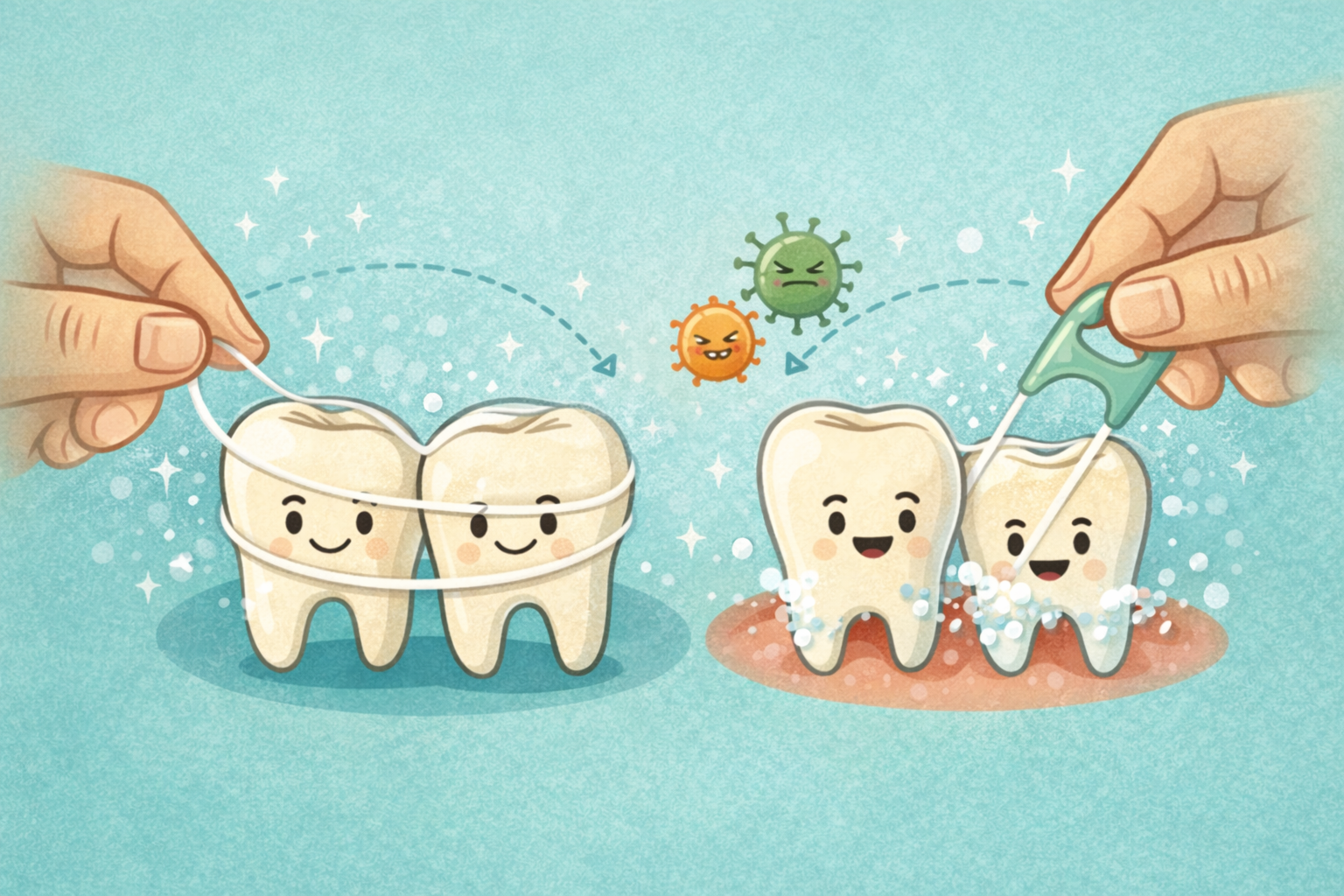
Extend it into flossing: Coconut oil in dental floss carries its antimicrobial properties into the interproximal spaces between teeth where plaque builds and brushing cannot reach.
-
Pair with n-HA for enamel support: Coconut oil cleans the surface; n-HA rebuilds what is underneath. Using both means the surface stays cleaner and the enamel becomes more resistant to staining over time.
-
Add targeted whitening when needed: For deeper stains or a brightness boost, whitening strips that pair coconut oil with responsibly dosed peroxide deliver effective results without unnecessary enamel stress.
-
Rinse after staining foods: A water rinse within a few minutes of coffee, wine, or dark-pigmented foods limits how much staining pigment the bacterial film has to bind, reducing the workload for both coconut oil and your whitening routine.
Frequently Asked Questions
1. Is coconut oil actually good for teeth?
Yes. Coconut oil's lauric acid content gives it genuine antimicrobial properties. Peer-reviewed clinical studies have confirmed measurable reductions in plaque scores and gingival inflammation with consistent use. It is a well-supported ingredient for daily oral hygiene maintenance, complementing, not replacing, brushing, flossing, and professional care.
2. Does coconut oil whiten teeth?
Not on its own through bleaching, but it plays a meaningful supporting role in whitening formulas. By keeping tooth surfaces clean and reducing the bacterial film that traps staining pigments, coconut oil creates better conditions for active whitening ingredients like peroxide and bromelain to work. In a well-formulated product, coconut oil makes every other whitening ingredient more effective and helps results last longer.
3. Is peroxide safe to use with coconut oil?
Yes, and they complement each other well. Peroxide at dentist-calibrated concentrations is the most effective available ingredient for active stain removal, and its safety is well-established at appropriate doses. Coconut oil handles the daily antimicrobial and surface-cleaning work that peroxide is not designed for. A routine that includes both covers far more ground than either ingredient alone.
4. How long does coconut oil take to show results?
Clinical studies have shown measurable improvements in plaque and gingival scores within 2-4 weeks of consistent daily use. Visible surface brightness from cleaner enamel develops more gradually, most people notice a difference around 4-6 weeks. Pairing with a whitening strip treatment accelerates visible results significantly.
5. Is coconut oil safe for daily use on teeth?
Yes. Unlike high-concentration peroxide treatments, coconut oil is biocompatible with enamel at any frequency of use. Multiple clinical trials have been conducted over 30-day periods with no adverse effects reported.
6. What ingredients pair best with coconut oil in toothpaste?
Nano-hydroxyapatite is the most impactful pairing, it rebuilds enamel mineral density while coconut oil handles surface antimicrobial action. Bromelain adds enzymatic stain lifting, aloe vera supports gum health, and xylitol reinforces the antimicrobial benefit through a different pathway. Together these address the main dimensions of oral health that no single ingredient can cover alone.