The Science of Better Flossing: Texture, Glide, and Daily Consistency
Floss seems like one of the most basic products in your bathroom. But two kinds of floss can feel completely different once they’re between your teeth.
The art of better flossing comes down to two things. The floss needs to actually touch the sides of your teeth and dislodge plaque where a brush can’t get in as directly. It has to feel practical enough that you’re actually going to use it, as well.
This is where texture, thickness, flexibility, glide and durability come into play.
According to the American Dental Association, information on floss and interdental cleaning states that cleaning between the teeth aims to reach areas that the toothbrush does not easily reach.
Research also suggests that adding floss or other interdental cleaners to brushing may reduce plaque or gingivitis, although the certainty of that evidence is low to very low.
So the goal is not to crown one floss design as universally best. It is to understand how construction affects the cleaning experience, then choose a design you can use correctly and consistently.

TL;DR
The secret to better flossing is not the thinnest, slickest, most heavily coated thread. The floss itself does the heavy lifting, mechanically breaking up plaque between teeth. Texture, thickness, flexibility, glide, and shred resistance can all affect comfort and control, and therefore the frequency of flossing. A great floss should be a combination of good contact, durability, comfort, smart materials, and an experience you can realistically do every day.
What Actually Makes Dental Floss Effective?
Dental floss’s primary mechanism of action is mechanical cleaning. The thread is passed in between the teeth, looped around each tooth and worked against the tooth surface to dislodge plaque. But coatings and infused ingredients can help with comfort or formulation goals, they do not replace the physical cleaning action of the floss itself.
This is important because sometimes floss is marketed with the idea that one ingredient does all the work.
In reality, the main job is mechanical. Don’t just go straight down and back up with the floss. It should hold one tooth in a C-shape, slide over the surface, then do the same for the next tooth.
Dental floss works mainly through mechanical cleaning. The thread is guided between teeth, curved around each tooth, and moved against the tooth surface to disturb plaque. Coatings and infused ingredients may support comfort or formulation goals, but they do not replace the physical cleaning performed by the floss itself.
That distinction matters because floss is sometimes marketed as if one ingredient does all the work.
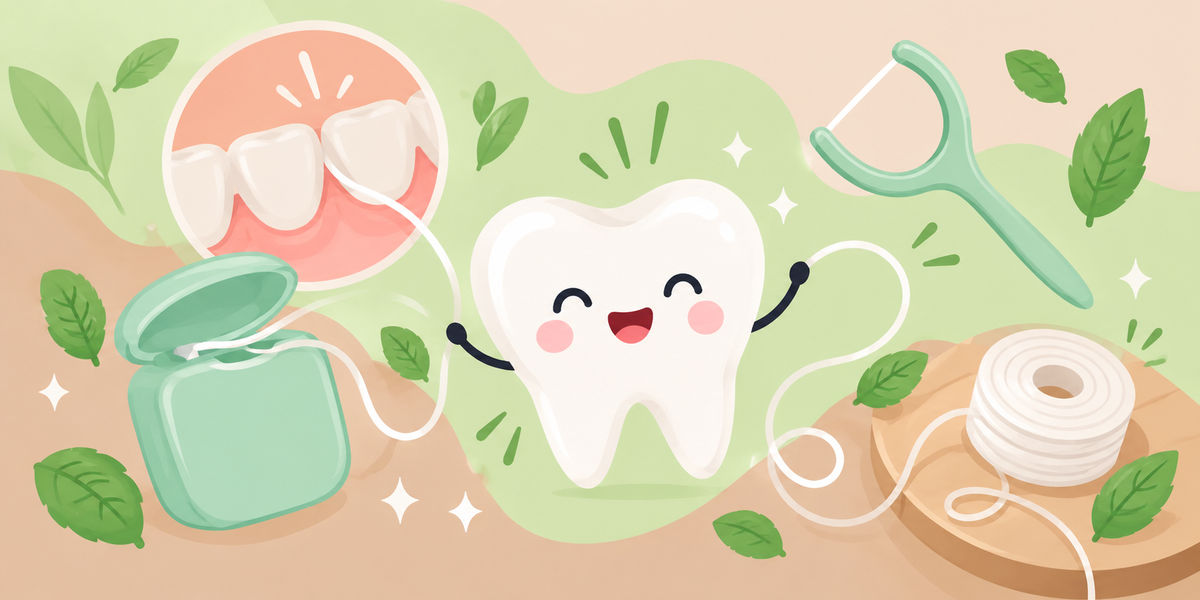
Floss should not simply pass straight down and back out. It should gently hug the side of one tooth in a C-shape, move along the surface, then repeat against the neighboring tooth. The ADA recommends daily interdental cleaning as part of an oral-care routine.
The evidence deserves context. A Cochrane review of home interdental cleaning devices included 35 randomized controlled trials involving 3,929 adults. It found that floss or interdental brushes added to toothbrushing may reduce gingivitis or plaque compared with brushing alone. However, most studies were short, and the overall evidence was rated low to very low certainty.
That does not make flossing pointless. It means the science does not support dramatic promises. Interdental cleaning targets surfaces brushing does not easily reach, and good technique still matters.
If you want a closer look at the format itself, SAINT's guide to traditional string floss versus floss picks explains why control around each tooth matters.
Texture, Thickness, and Flexibility Change How Floss Behaves

Flosses are not physically identical.
A 2025 study of the mechanical and physical properties of dental floss tested 18 commercially available products. Researchers found differences in width, filament diameter, elongation, and maximum load before breaking. In other words, construction can change how much a thread stretches, how wide it is, and how it responds to force.
A very thin floss may pass more easily through tight contacts. A broader or expandable floss may feel more substantial once it is between the teeth. A flexible multi-thread design can also compress during insertion and change shape during use.
But thicker does not automatically mean better.
One randomized clinical study comparing variable-diameter floss with conventional unwaxed floss found no significant difference in plaque or gingival index reduction. Another study comparing waxed, unwaxed, woven, and shred-resistant floss found no significant difference in overall plaque reduction, even though comfort ratings differed.
Texture and thickness can affect handling. They should not be turned into unsupported claims that one construction removes more plaque for everyone.
SAINT Fresh Coconut Dental Floss uses a soft, textured, expandable multi-thread construction with more than 500 woven fibers. That makes the design meaningful from a feel and handling perspective, while the thread still performs the core mechanical cleaning.
Is the Slickest or Thinnest Floss Always Better?
No. Easy glide can help floss move through tight contacts without uncomfortable snapping, but slipperiness is only one part of a useful design. Good floss also needs enough strength, control, surface contact, and resistance to shredding to remain comfortable and practical from the first tooth to the last.
Waxed and unwaxed floss are a good example.
A clinical comparison of waxed and unwaxed dental floss involving 80 patients found no statistically significant difference among the four tested flosses for plaque removal or gingivitis prevention.
That means wax should not automatically be treated as evidence that a floss cleans better. Wax mainly changes the way the thread handles and moves.
For some people, smoother movement makes tight spaces easier to navigate. For others, a more textured or expandable design may feel easier to control around the tooth.
Shredding matters for the same practical reason. A floss that repeatedly frays, snaps, or gets stuck can make a simple habit frustrating.
The goal is balance. You want enough glide to enter comfortably, but enough control to curve the floss against the tooth instead of simply sliding it through.
Material choices can matter too. If you are evaluating thread and coating materials, SAINT's guide to PFAS-free dental floss explains why a PFAS-free label is useful information, but should still be considered alongside glide, durability, and everyday performance.
The Thread and the Coating Have Different Jobs

A thoughtfully designed floss does not need every ingredient to do the same thing.
The thread should handle the physical cleaning. The coating can help change glide, feel, flavor, or the way supporting ingredients are delivered.
SAINT Fresh Coconut Dental Floss pairs its expandable multi-thread construction with vegan wax, coconut oil, xylitol, and nano-hydroxyapatite. It is also described as PFAS-free, SLS-free, and paraben-free.
Vegan wax helps the floss move through tooth contacts more comfortably. It is a handling ingredient, not the main reason plaque is removed.
Xylitol has a different role. A 2025 systematic review discussed in SAINT's guide to xylitol in toothpaste and floss found that xylitol chewing gum reduced mutans streptococci in many of the included comparisons. But delivery method matters. Evidence from chewing gum should not automatically become a claim that xylitol-coated floss prevents cavities.
Nano-hydroxyapatite also needs context. Clinical research has examined it mainly in toothpastes, mouthwashes, and gels. A 2025 systematic review and meta-analysis of hydroxyapatite toothpastes evaluated fluoride-free hydroxyapatite toothpaste for early caries prevention and remineralization. That supports describing hydroxyapatite as an enamel-focused oral-care ingredient, but it does not prove the same clinical outcome from floss.
For more background on the mineral itself, SAINT's guide to nano-hydroxyapatite and enamel remineralization explains how its enamel-focused role differs from the mechanical job of floss.
Coconut oil is also better treated as part of the surrounding formula rather than the main cleaning mechanism.
This is full-formula thinking. The woven thread handles mechanical plaque disruption. The coating and infused ingredients support the feel, glide, and broader formulation.
Does the Type of Floss Matter?
Yes, but mostly because the right type can make good technique and regular use easier. Research has not shown one universal floss construction to be best for everyone. The better choice is the floss that fits your tooth spacing, feels comfortable, stays intact, and lets you clean the sides of your teeth with control.
One person's ideal floss may be annoying for someone else.
Very tight contacts can make a thick, rigid product difficult to insert. Wider spaces may make an extremely thin thread feel less substantial. Orthodontic work, bridges, implants, and larger interdental spaces can also change which cleaning tool is practical.
In one study of four floss types, differences in plaque reduction were not statistically significant, but participants still rated the products differently for comfort and ease of use.
That does not prove comfort always leads to better oral health. It does show why product design cannot be separated from the person using it.
If you prefer a more textured feel, an expandable woven floss may make sense. If traditional string floss is difficult to control, a dentist or hygienist may suggest another interdental cleaner that better fits your mouth.
How Do You Choose Floss You Will Actually Use Every Day?
Choose floss that fits comfortably between your teeth, stays intact, gives you enough control to hug each tooth, and feels easy enough to use consistently. The best design on paper has limited value if it is uncomfortable, frustrating, or difficult enough that you regularly skip flossing.
Consistency is where product design becomes especially practical.
A 2022 study of flossing habits and barriers surveyed 213 adults and found that only 16% were habitual floss users, defined in that study as flossing at least once daily. The researchers also examined barriers such as forgetting, bleeding, discomfort, and physical difficulty using floss.
Behavior research points in the same direction. A study of planning and daily flossing adherence followed 157 university students and found that planning when, where, and how to floss predicted changes in flossing behavior better than the measured motivational factors alone.
When you compare floss, look at the whole design:
- Fit: Can it pass through your tooth contacts without painful forcing?
- Control: Can you curve it around each tooth instead of just snapping it through?
- Texture: Does the surface feel comfortable against teeth and gums?
- Durability: Does it resist shredding and breaking during normal use?
- Glide: Can it enter and leave the contact smoothly?
- Materials: Are you comfortable with the thread and coating ingredients?
- Consistency: Is this a floss you can realistically use every day?
SAINT's approach combines a soft, expandable multi-thread design with vegan wax and supporting ingredients including coconut oil, xylitol, and nano-hydroxyapatite. It is one example of designing around both mechanical cleaning and the daily user experience.
Floss also works best as one part of a complete routine. SAINT's guide to building a daily oral-care routine that actually works places interdental cleaning alongside brushing and other regular oral-care habits.
Conclusion
The science of better flossing is less complicated than the marketing around it.
The thread still does the main job. It needs to reach between teeth, hug the tooth surface, and mechanically disrupt plaque. Texture, thickness, flexibility, wax, and shred resistance matter because they change how easy and comfortable that process feels.
There is no strong evidence that one floss construction is universally best for every mouth. The better question is whether the floss fits your teeth, stays intact, feels comfortable, and helps you clean consistently.
If you prefer a soft, textured option, SAINT Dental Floss uses an expandable multi-thread design with vegan wax, coconut oil, xylitol, and nano-hydroxyapatite. Evaluate the full construction, not just one headline ingredient, and choose the floss you can use well every day.
Frequently Asked Questions
1. Is thicker dental floss better than thin floss?
Not automatically. Thicker or expandable floss may feel more substantial, while thinner floss may move more easily through tight contacts. Research has not established one thickness as universally better for plaque removal.
2. Does textured floss remove more plaque than smooth floss?
Texture can change how floss feels and contacts the tooth, but current evidence does not prove that textured floss always removes more plaque. Technique, access, and consistent use remain important.
3. Is waxed or unwaxed floss better?
Neither is universally better. Clinical research has found little meaningful difference in plaque removal between waxed and unwaxed floss in several comparisons. Wax can improve glide and handling, so comfort and tooth spacing may be more useful deciding factors.
4. Why does some dental floss shred between my teeth?
Floss may repeatedly catch or shred because of tight contacts, the characteristics of the thread, or a rough area around a tooth or restoration. If it consistently tears in the same place, ask a dentist to check that area.
5. What type of floss is easiest to use every day?
The easiest floss is one that fits your contacts, feels comfortable, stays intact, and gives you enough control to wrap around each tooth. Research comparing floss types suggests comfort and ease of use can differ even when plaque-removal differences are small. Consistency matters more than choosing a single “best” format.